
The most effective eCommerce SEO strategies don't treat organic search as just another line item on a marketing budget. They see it for what it truly is: a core business asset. For a premium brand, a powerful SEO presence is the digital version of a flagship store on Fifth Avenue—it builds real equity, attracts customers who are ready to buy, and drives sustainable revenue for the long haul.
Why SEO Is The New Digital High Street
Think of your marketing spend like an investment in real estate. Paid advertising, such as pay-per-click (PPC) campaigns, is like renting a pop-up shop for a weekend. It gets you a burst of traffic and makes you visible right away, but the moment you stop paying the rent, your shop disappears. It’s a short-term play that needs constant cash to keep the doors open.
On the other hand, a solid SEO strategy is like buying a prime piece of land in a prestigious shopping district and building your own store. It takes a bigger investment of time and resources upfront to get it built, but once it's established, it becomes a valuable asset that brings in organic traffic and sales on its own. This "digital flagship" doesn't just vanish; its value actually grows over time, building your brand's authority and becoming a permanent, trusted destination for customers.
The Lasting Value of Organic Visibility
This difference is everything for luxury brands, where perception and permanence are non-negotiable. A strong organic presence sends a signal of authority and trust to discerning consumers. When your brand shows up at the top of the search results for important terms, it’s not seen as just an ad. It’s an endorsement from the search engine itself, telling everyone that you are a credible and relevant leader in your field.
This long-term value shows up in the numbers, too. An analysis of over 20,000 eCommerce sites found that the average brand ranks for 1,783 keywords, which drives about 9,625 organic visits every month. If you tried to get that same traffic through paid search, it would cost an estimated £11,790.58 every single month. That's a huge ongoing expense that SEO helps you avoid.
SEO is not just about being found; it’s about being chosen. For luxury and DTC brands, a strong organic presence builds the kind of brand equity that paid ads can only rent. It establishes you as an authority, creating a foundation for sustainable growth and customer loyalty.
To make this distinction clearer, let's compare SEO and paid ads side-by-side.
Comparing SEO and Paid Ads for Luxury Brand Growth
This table breaks down the strategic differences between investing in organic search versus paid advertising, highlighting why SEO offers a more sustainable path to growth for premium brands.
| Attribute | SEO (Organic Search) | Paid Ads (PPC) |
|---|---|---|
| Time to Results | Slower, builds over months | Immediate, within hours |
| Cost Model | Upfront investment, then low ongoing cost | Continuous pay-per-click spending |
| Long-Term Value | Builds a permanent, appreciating asset | Value stops when you stop paying |
| Audience Trust | High, seen as an endorsement | Lower, recognized as an advertisement |
| Sustainability | Self-sustaining once established | Requires constant budget to maintain |
| Competitive Edge | Creates a strong, defensible position | Easily replicated by competitors |
As you can see, while paid ads offer a quick boost, SEO is the engine for building a brand that lasts.
Ultimately, investing in the best SEO ecommerce practices ensures your brand isn’t just a flash in the pan but remains a dominant force for years. If you're looking for a deeper dive into what's working right now, exploring effective SEO strategies for ecommerce sites is a great next step for any brand aiming for the top. It’s the difference between being a fleeting trend and becoming a timeless icon.
Building Your Digital Flagship With Technical SEO
If your on-page content is the interior design of your luxury boutique, then technical SEO is its architectural blueprint. It's the foundation. And if that foundation is flawed, everything you build on top of it—no matter how beautiful—is compromised. For the best seo ecommerce performance, your site’s technical health must be flawless, giving both search engines and high-end customers a seamless experience.
Think about building a physical flagship store. You wouldn't build on shaky ground or design a confusing layout that makes customers feel lost. Your website needs that same solid, logical structure so Google’s crawlers can navigate it effortlessly to discover and index all your valuable products and content.
This diagram shows how SEO acts as the permanent foundation for your digital store, while paid ads are more like a temporary, seasonal pop-up.
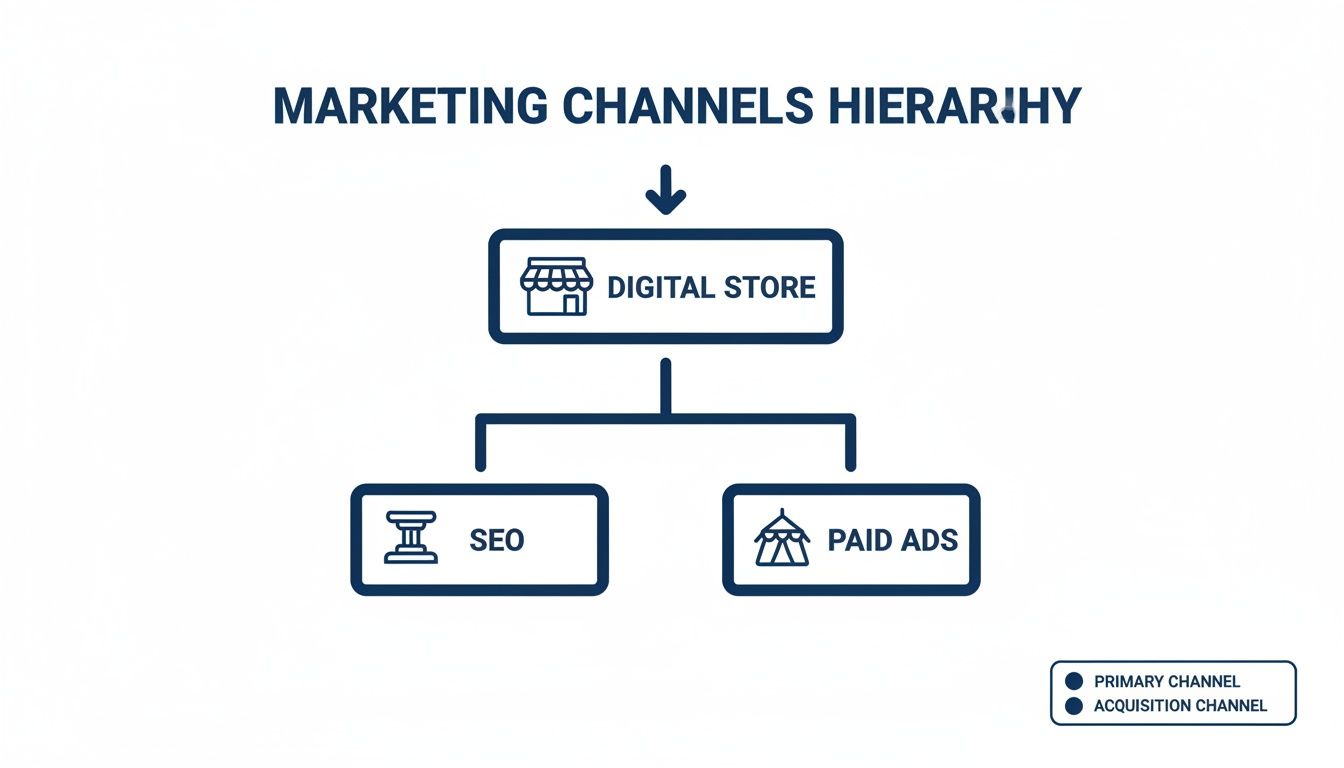
It’s a simple but powerful visual: a strong SEO foundation is what provides long-term stability and growth, supporting every other marketing effort you make.
The Cornerstones of Technical Excellence
To build this digital flagship correctly, you have to nail a few critical architectural elements. These components work together to create an experience that’s fast, secure, and easy for both people and search algorithms to understand. A technical audit should always be your first step to find and prioritize these high-impact areas.
Your audit should zoom in on three main pillars:
- Crawlability and Indexability: Can search engines even find and understand your pages? This means checking your
robots.txtfile, XML sitemaps, and making sure no important pages are accidentally blocked from view. - Site Speed and Performance: How quickly does your site load and react to clicks? Slow sites don't just frustrate users; they get penalized by search engines.
- Mobile Experience: Does your site work perfectly for the 73% of shoppers who browse on mobile? A mobile-first approach isn't a "nice-to-have" anymore. It's everything.
Optimizing Core Web Vitals For A Luxury Experience
Core Web Vitals are the specific metrics Google uses to measure a page's real-world user experience. For a premium brand, a sluggish, clunky website is the digital equivalent of a dirty, disorganized storefront. It instantly damages your brand perception and sends potential customers running.
A one-second delay in mobile load times can slash conversion rates by up to 20%. For luxury ecommerce, where every interaction shapes the brand story, speed isn't just a metric—it's a feature.
Get laser-focused on these three signals:
- Largest Contentful Paint (LCP): This measures loading performance. You want the main content on your page to be visible within 2.5 seconds.
- First Input Delay (FID): This measures how interactive your site is. Your page needs to respond to a user's first click or tap in less than 100 milliseconds.
- Cumulative Layout Shift (CLS): This measures visual stability. Elements shouldn't jump around as the page loads, which is incredibly annoying for users. A score below 0.1 is the goal.
Fixing these usually comes down to compressing those beautiful high-resolution images, cleaning up your code, and investing in high-performance hosting. You can get started by exploring various website speed optimization tools that help diagnose and fix performance bottlenecks.
Mastering Mobile-First Design
The modern luxury shopper is on their smartphone. Period. Your website has to be designed for their screen first, not as a shrunken-down afterthought. This goes way beyond a simple "responsive" layout.
A true mobile-first approach means obsessing over the mobile user journey from the very beginning. Think big, easy-to-tap buttons. Simple, intuitive navigation. And a checkout process so smooth you can complete it with one hand while holding a coffee. Every single element has to be optimized for a user who expects speed and convenience on the go.
Speaking The Language Of Global Customers With Hreflang
If your brand caters to an international clientele, you need to tell search engines which version of your site to show to which audience. This is where the hreflang tag comes in. It’s a simple piece of code that clarifies the language and regional target of a specific page.
For instance, it tells Google, "Hey, show my French-language site (fr-fr) to users in France, and my English-language Canadian site (en-ca) to users in Canada." Implementing hreflang correctly prevents duplicate content issues and guarantees your customers land on the right storefront. It’s a small technical detail that creates a localized experience, builds trust, and ultimately boosts conversions for any global ecommerce brand.
Optimizing Every Detail With On-Page SEO
Once your site's technical foundation is solid, it’s time to shift focus to the individual rooms of your digital flagship store. This is where on-page SEO comes in. It’s all about refining every product page and category to not only captivate your audience but also to send powerful relevance signals to search engines.
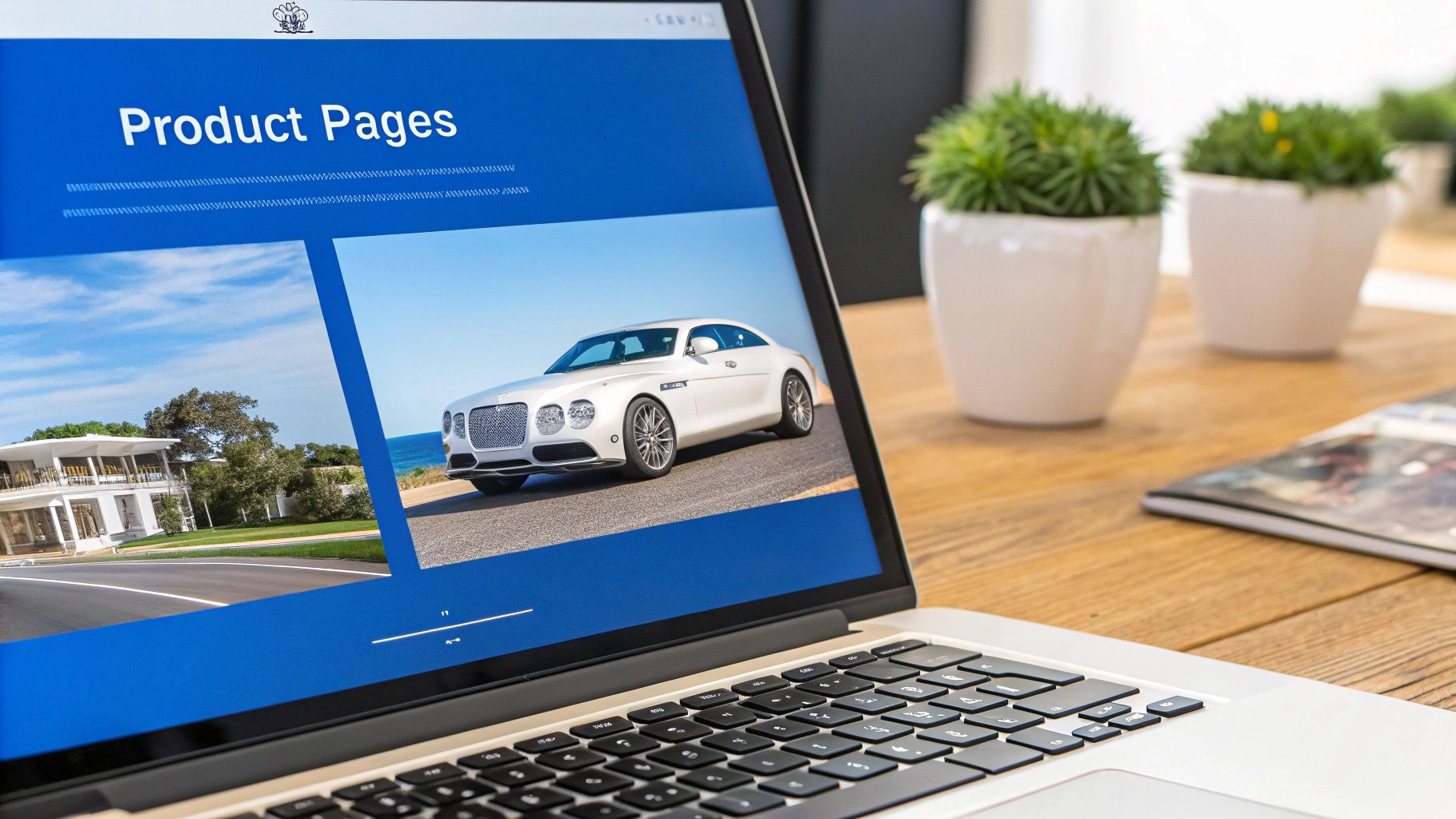
Think of each product page as a meticulously arranged display in a luxury boutique. Everything from the product description to the imagery must communicate quality and desirability. For the best seo ecommerce results, this means writing compelling copy that weaves in target keywords naturally while telling a story that resonates with your brand's prestige.
Crafting Compelling Product And Category Pages
Your product and category descriptions are your digital sales associates. They need to do more than just list features; they have to evoke emotion and create desire. Avoid generic, manufacturer-supplied text at all costs. It can trigger duplicate content issues and makes your brand look just like everyone else.
Instead, concentrate on creating unique, benefit-driven narratives.
- Product Descriptions: Write detailed, original descriptions that speak to customer pain points and highlight what makes your product special. Use sensory language that helps the customer imagine themselves using the item.
- Category Descriptions: Add a concise, keyword-rich paragraph at the top of your category pages. This gives context to both users and search engines, helping the page rank for broader terms like "Italian leather handbags."
The Power Of High-Quality Visuals
For luxury brands, imagery is everything. High-resolution photos and videos are non-negotiable for showing off the quality and craftsmanship of your products. But here's the catch: large media files can seriously slow down your page speed, hurting both your SEO and user experience.
The key is finding the right balance. You have to compress and optimize your images without sacrificing that crisp, premium look. Proper image optimization ensures your pages load quickly while still presenting your products in their best light. You can learn more about how to optimize images for the web and see a direct impact on your site’s performance.
On-page SEO is where data meets storytelling. It’s about using the right keywords to be found, then using the right words and visuals to convince a high-end consumer that your product is the only choice.
Using Structured Data To Stand Out
Structured data is a type of code you add to your site to help search engines really understand your content. Think of it as leaving clear, descriptive labels on your products for Google. It's one of the most powerful on-page tactics for eCommerce, hands down.
When you correctly implement structured data (often using Schema.org), Google can show rich snippets right in the search results. These beefed-up listings can include:
- Product Ratings: Star ratings build instant social proof.
- Pricing: The current price of the item.
- Availability: Clear information like "In Stock."
These snippets make your listing far more eye-catching than your competitors'. In fact, one study found that pages with rich snippets can see a click-through rate increase of up to 30%. This small addition builds trust before a user even clicks, driving more qualified, high-intent traffic straight to your store. It’s a small technical effort that delivers a huge competitive advantage.
Earning Authority Through Strategic Link Building
In the exclusive world of luxury retail, your reputation isn't just important—it's everything. The same is true for your digital presence. For the best seo ecommerce strategy, building a high-authority backlink profile is how you build that same prestige in the eyes of search engines like Google.
Think of each high-quality backlink as a powerful vote of confidence. It’s the digital version of a feature in a high-end magazine or a glowing review from a respected critic. These links don't just help your search rankings; they tell search engines that your brand is a legitimate, authoritative voice in its market.
Moving Beyond Generic Outreach
For premium brands, the typical mass-outreach approach to link building just won't cut it. Your strategy needs to be as carefully curated as your product collections. The real goal is to earn placements that match your brand’s elevated status and speak to a discerning audience.
This means focusing on quality, not quantity. A single link from a globally recognized publication is worth infinitely more than dozens of links from low-authority blogs.
Each backlink tells a story about your brand. Earning links from high-authority, relevant sources is like being seen in the right places—it builds credibility, enhances prestige, and attracts the right kind of attention from both search engines and customers.
High-Impact Link Acquisition Strategies
To build an impressive backlink portfolio, you need to focus on tactics that reflect your brand's commitment to excellence. These methods not only attract valuable links but also cement your position as a market leader.
Here are three powerful strategies tailored for premium markets:
- Digital PR in High-End Publications: Get your brand featured, mentioned, or quoted in respected online magazines, luxury lifestyle blogs, and premier industry journals. This puts your brand in front of an affluent audience and generates powerful, authoritative backlinks.
- Collaborations with Respected Influencers: Partner with established influencers and tastemakers whose audience and values mirror your own. Authentic collaborations can lead to organic mentions and links that drive both authority and targeted referral traffic.
- Creation of Link-Worthy Assets: Develop unique, high-value content that others in your industry will naturally want to reference and share. This could be an exclusive digital lookbook, an in-depth report on market trends, or a beautifully produced "how-to" guide.
The Growing Importance of Digital Authority
As retail continues its massive shift online, establishing this digital authority is no longer optional. The market is expanding at a dizzying pace, with online shopping projected to capture 41% of global retail sales by 2027. This change is overwhelmingly mobile-driven—with 77% of retail website visits now coming from smartphones—making a strong, authoritative online presence absolutely crucial for growth.
To truly earn authority in this space, understanding how to earn high-quality backlinks is a must. For a deeper dive, explore this practical guide to link building for ecommerce sites. Mastering these techniques ensures your brand doesn't just participate online but leads the conversation, securing its digital standing and attracting customers who value quality and trust above all. It's how you turn a simple sales channel into a recognized and respected digital flagship.
Turning High-End Traffic Into Revenue With CRO
Getting your ideal, affluent customer to your website is a huge win for any eCommerce SEO strategy. But let's be honest—getting them to your digital doorstep is only half the battle. The real test isn't just traffic volume; it's how much of that traffic actually turns into revenue. This is where Conversion Rate Optimization (CRO) steps in as SEO's essential partner.
For a premium brand, the user experience is everything. A clunky, confusing, or slow journey from discovery to checkout can instantly tarnish the perception of quality you’ve worked so hard to build. SEO delivers the visitors who are ready to buy; CRO makes sure their experience is so smooth that making a purchase feels like the most natural thing in the world.
Bridging SEO Insights With UX Enhancements
Your SEO data is a goldmine for your CRO strategy. It tells you exactly what your customers are looking for, the words they use, and how they behave once they land on your site. By digging into this data, you can spot friction points and find clear opportunities to make things better.
For instance, you might look at user pathways in Google Analytics and notice that people searching for "vegan silk pillowcases" often leave after hitting the category page. That’s a signal. It could mean there's a disconnect between what they expected and what they saw. Maybe you need to refine the page copy or improve the product filters to guide them more effectively.
Or think about your internal site search. The queries people type in are a direct line to their thoughts. If you see dozens of searches for "gift wrapping" but your site only mentions "complimentary packaging," you can align your language. You could even build a dedicated landing page to address that need, removing friction and boosting conversions.
CRO Tactics For The Premium Shopper
Optimizing for a luxury audience isn't about using generic, high-pressure sales tricks—that can cheapen your brand in a heartbeat. It’s about building trust, providing clarity, and creating an elevated experience by removing obstacles.
A solid CRO plan for a premium brand should focus on a few key areas:
- Frictionless Checkout Process: Every extra field or unnecessary step is another chance for someone to abandon their cart. Simplify things with guest checkout, auto-filling forms, and plenty of payment options.
- Effortless Product Discovery: Your site search needs to be smart. It should understand synonyms, forgive typos, and return beautiful, visual results that make finding the perfect item a pleasure, not a chore.
- Leveraging Trust Signals: Put security badges, clear return policies, authentic customer reviews, and endorsements from reputable sources where people can see them. These small touches reassure shoppers that their purchase is safe and you stand behind your products.
The best CRO for luxury brands is invisible. It’s not about flashy pop-ups or aggressive calls to action. It’s about creating an experience so intuitive and refined that the path to purchase feels effortless.
Ultimately, SEO and CRO are two sides of the same coin, working together to drive profitable growth. Across all industries, organic search delivers a respectable average conversion rate of 2.7%. For premium DTC brands, the goal is to blow past that benchmark. That’s what separates the market leaders from everyone else—a sophisticated partnership between SEO and CRO that delivers real, measurable revenue.
By treating every visitor's journey with care, you do more than just turn traffic into transactions. You turn first-time buyers into loyal brand advocates. If you're ready to go deeper, our guide on developing a powerful conversion rate optimization strategy has more actionable insights. This holistic approach ensures your digital flagship doesn't just attract visitors—it captivates them.
Measuring The Metrics That Actually Matter
To prove your investment in a high-end eCommerce SEO strategy is paying off, you have to look past the vanity metrics. Sure, seeing big traffic numbers and high rankings feels good, but they don’t tell you the whole story. More importantly, they don't tell you if you're actually growing the business.
Think of it like this: owning a beautiful, bustling flagship store is great, but if no one is actually buying anything, the business is failing. You need to focus on the numbers that act as your digital cash register, showing you exactly how much value your organic search presence is creating. The question needs to shift from "how many people visited?" to "how many visitors bought something, and how much did they spend?"
Focusing On Revenue-Driven KPIs
The most effective eCommerce SEO campaigns are always measured by how much they contribute to the top line. By using tools like Google Analytics 4 (GA4) and Google Search Console, you can dial in on the data that truly matters. These platforms give you a clear window into how your SEO efforts are translating directly into sales.
Here are the essential KPIs every premium eCommerce brand should be tracking:
- Organic Revenue: This is your north star. It’s the total revenue generated specifically from visitors who found your site through a search engine—no ads involved.
- Organic Conversion Rate: This shows you the percentage of organic visitors who took a desired action, like making a purchase. It’s a direct measure of how well your site turns browsers into buyers.
- Customer Lifetime Value (CLV) from Organic Search: Are you attracting one-time shoppers or loyal fans? Tracking the CLV of your organic audience reveals if your SEO strategy is bringing in high-value, repeat customers.
Measuring the right KPIs is the difference between guessing and knowing. For an eCommerce brand, it’s how you prove that SEO isn't just a marketing cost—it's your primary growth engine.
Uncovering Actionable Insights
Beyond these core KPIs, you should also dig a bit deeper into your data to find new opportunities. For instance, start tracking your rankings for your most profitable, high-intent keywords. A high ranking for "cashmere throw blanket" is infinitely more valuable than a top spot for a vague, informational search term.
When you consistently monitor these performance indicators, you can demonstrate a clear return on investment and intelligently refine your strategy over time. This data-first approach turns your website into a predictable, scalable source of revenue, proving the immense value of a sophisticated eCommerce SEO plan.
Your Top Ecommerce SEO Questions Answered
Even with the best strategy laid out, you're bound to have questions. That's a good thing—it means you're thinking critically about what it takes to succeed. Here are some of the most common ones we hear from premium brands, with straightforward answers to help you move forward.
How Long Does Ecommerce SEO Take To Show Results?
I get it, you want to see a return on your investment. While quick technical fixes might give you a small bump in a few weeks, a real ecommerce SEO strategy is a long game. Think of it like aging a fine wine—it takes patience, but the result is far more valuable and lasting.
You can expect to see meaningful movement in organic traffic and rankings within 3 to 6 months. For really competitive terms, especially in the luxury space, it could take 6 to 12 months or even longer to claim those top spots.
The most important thing is consistency. Unlike a paid ad that disappears the moment you stop funding it, SEO builds on itself, creating a powerful, appreciating asset for your brand over time.
What's More Important: Technical SEO Or Content?
This question comes up a lot, but it’s like asking if the engine or the design of a luxury car is more important. You can't have one without the other; they work together.
Think of technical SEO as the foundation and frame of your flagship store. Content is the stunning interior design, the curated product collections, and the world-class customer service. A beautiful store built on a shaky foundation will eventually collapse, and a perfect foundation with nothing inside is just an empty room.
Technical SEO is what makes your site fast, secure, and easy for search engines to understand. Without a solid technical base, even the most beautiful product photography and compelling descriptions will never be found. For premium brands where the user experience is everything, a slow or broken site immediately damages your reputation.
You always start with a technically sound website, then you fill it with exceptional, optimized content.
Should I Hire An SEO Agency Or Do It In-House?
The right call here really boils down to your team's current skills and how fast you want to grow.
Some on-page SEO tasks, like writing product descriptions or blog posts, can absolutely be managed in-house, especially if you have talented writers on your team. This gives you tight control over your brand's unique voice.
However, the more complex side of SEO—things like technical audits, international targeting with hreflang, building high-quality backlinks, and deep data analysis—requires specialized expertise. Search engine algorithms change constantly, and it takes a dedicated focus to keep up.
For ambitious luxury and DTC brands where the website is the primary engine for revenue, partnering with a specialist agency is usually the faster path to meaningful results. An experienced agency brings sophisticated tools, a dedicated team, and proven strategies that can deliver a return on investment that’s often tough for an in-house team to match on its own. It’s about ensuring your digital flagship isn't just beautiful, but built to perform.
Ready to transform your website into a powerful growth engine? KN Digital designs and optimizes digital flagship experiences that elevate brand prestige and convert high-end traffic into loyal customers. Discover how our conversion-focused approach can deliver measurable revenue growth for your brand at https://kndigital.co.