

The best SEO for Shopify isn't about finding a magic app or a list of quick tricks. It's a complete system designed from the ground up to make you money. The right approach treats search optimization as the foundational blueprint for your digital flagship store, connecting every technical fix and content decision to real, measurable business growth.
Your Blueprint for Shopify SEO Success
Many premium brands see SEO as a complicated, technical cost center. It’s time to reframe that idea completely. Think of SEO not as an expense, but as your most powerful growth investment. It's the architectural plan ensuring your beautiful Shopify store is built on solid ground, visible to your ideal customers, and engineered for sales.
Forget about chasing algorithm updates that change every few months. Our focus is on building a powerful, sustainable online presence that attracts high-intent customers and establishes your brand as a market leader. This means moving beyond simple keyword rankings and connecting every single action to outcomes that matter—like increased average order value and higher conversion rates. To lay the groundwork, you can explore a comprehensive guide on how to improve Shopify SEO and drive real growth.
The Three Pillars of Revenue-Focused SEO
To build this digital flagship, we’re going to focus on three core pillars. Each one builds on the last, creating a powerful synergy that drives not just traffic, but profitable, long-term growth. Getting this framework right is the first real step to mastering the best SEO for Shopify.
To give you a clearer picture, here’s how these pillars work together to turn search visibility into actual revenue.
Shopify SEO Pillars for Revenue Growth
| SEO Pillar | Primary Focus | Key Business Outcome |
|---|---|---|
| Technical Foundations | Site speed, mobile performance, indexability, and clean URL structures. This is the non-negotiable bedrock of your store. | Improved user experience, higher search engine crawl efficiency, and prevention of ranking penalties. |
| On-Page Excellence | Crafting compelling content for product pages, collections, and blogs. This includes optimizing metadata, imagery, and internal linking. | Increased organic traffic for target keywords, higher on-page engagement, and better conversion rates. |
| Strategic Authority | Building your brand’s reputation across the web through high-quality backlinks and off-page signals. | Stronger domain authority, enhanced brand credibility, and top rankings for competitive search terms. |
This structure ensures that you're not just checking boxes but building a cohesive system where each part strengthens the others.
The stakes have never been higher. For example, Shopify merchants generated a staggering $14.6 billion in sales during the 2025 Black Friday/Cyber Monday weekend alone. This explosive growth shows exactly why world-class SEO is no longer optional—it's the lifeline for any brand serious about capturing its share of organic traffic in a crowded market.
By focusing on these three pillars, you shift from a reactive, checklist-based approach to a proactive, revenue-driven strategy. This is how increased visibility translates directly into higher sales and a stronger bottom line.
This guide provides the complete blueprint. We'll break down each pillar into actionable steps specifically for premium brands, giving you the clarity needed to turn your Shopify store into a dominant force in search. For more on this, you can explore our detailed guide on how SEO drives revenue growth.
Mastering Shopify's Technical SEO Foundations
Think of technical SEO as the foundation of your digital storefront. It’s the stuff you don't see—the wiring, the plumbing, the structural beams—that keeps everything running smoothly. If that foundation is cracked, it doesn't matter how beautiful your product displays are; Google won't be able to navigate your store properly, and your rankings will suffer.
For premium brands, a solid technical setup isn't just about search visibility. It's a direct reflection of the quality and care you put into your customer experience. This is where we get serious, moving beyond surface-level tweaks to fix the core mechanics of your Shopify store. Getting this right is absolutely non-negotiable for building a platform that can grow with you.
The Critical Role of Site Speed
In ecommerce, speed isn't a feature; it's a baseline expectation. A slow website is the quickest way to lose a sale and tarnish your brand's reputation. This is especially true for luxury brands, where a clunky digital experience completely undermines the premium quality of the products you're selling.
Site speed is more than a "nice-to-have." For Shopify stores, it's a ranking death sentence if you ignore it. Google’s Core Web Vitals directly reward fast-loading sites, and those sites consistently beat their slower rivals in both search visibility and sales. For the kinds of brands we work with—in skincare, jewelry, and high-end home improvement—this translates to real money. A tiny 1-second delay can tank conversions by 7%, while a properly optimized site can see lifts of 28-38% and a big drop in abandoned carts.
So, what’s slowing things down? It usually comes down to a few common culprits:
- Large, Unoptimized Images: Product photography has to be stunning, but massive, uncompressed image files will bring your site to a crawl.
- App Bloat: It's tempting to add app after app, but each one adds more code (JavaScript and CSS) that has to load, slowing everything down.
- Inefficient Theme Code: Not all Shopify themes are built the same. A poorly coded theme can be a major performance bottleneck right out of the box.
The key is to be proactive. Regularly compress your images, do a ruthless audit of your apps (if you're not using it, lose it), and invest in a theme known for being lightweight and fast. For a much deeper dive, check out our guide on how to improve website loading speed.
Guiding Google with Sitemaps and Crawlability
Before Google can rank your pages, it has to find them. That's where a sitemap comes in. It's essentially a roadmap you hand to search engine crawlers, listing out all the important URLs on your store, from product pages to your latest blog post. Shopify is great because it automatically generates a sitemap.xml file for you.
Here’s a simple visual of how a sitemap helps organize your site's structure for Google:
This structure makes it incredibly easy for search engines to discover and index all your valuable content. By submitting your sitemap to Google Search Console, you're opening a direct line of communication, telling Google exactly which pages you want to show up in search results.
Your sitemap isn't just a list of links. It's a declaration to search engines, telling them which pages matter most. A clean, current sitemap ensures your key products and content get crawled and indexed fast.
Tackling Duplicate Content with Canonical Tags
One of the trickiest technical SEO issues on Shopify is duplicate content. It happens all the time without you even realizing it. Product variants, collection filters, and tags can all create multiple URLs for the exact same content. For instance, a single shirt available in five colors might generate five different URLs, leaving search engines confused about which one is the "real" page to rank.
This is what the canonical tag was invented for. It’s a simple piece of code that points back to the "master copy" of a page. By setting a canonical URL, you're telling Google, "Hey, all these similar pages? They're all just versions of this one page. Consolidate all the ranking power here."
Shopify handles a lot of this automatically, which is helpful. But it's still crucial to double-check your theme's implementation and use a tool like Google Search Console to catch any errors that might be slipping through the cracks and hurting your SEO.
Crafting High-Converting On-Page SEO and Content
Once your technical foundation is solid, it's time to shift focus to the art of on-page optimization. This is where we create the digital experiences that don't just signal relevance to search engines, but actually convince discerning customers to click "buy." On-page SEO isn't about scattering keywords around; it's about telling a compelling brand story on every single product page, collection, and blog post.
For premium brands, a generic product description is a massive missed opportunity. Your content has to ooze value, craftsmanship, and the unique story behind each item. This is how you turn a simple product listing into a narrative that justifies a higher price point and builds a real connection with your audience.
The flow chart below nails down the core process of any winning SEO strategy. You can see how everything moves from fixing the basics to making sure your content gets found.
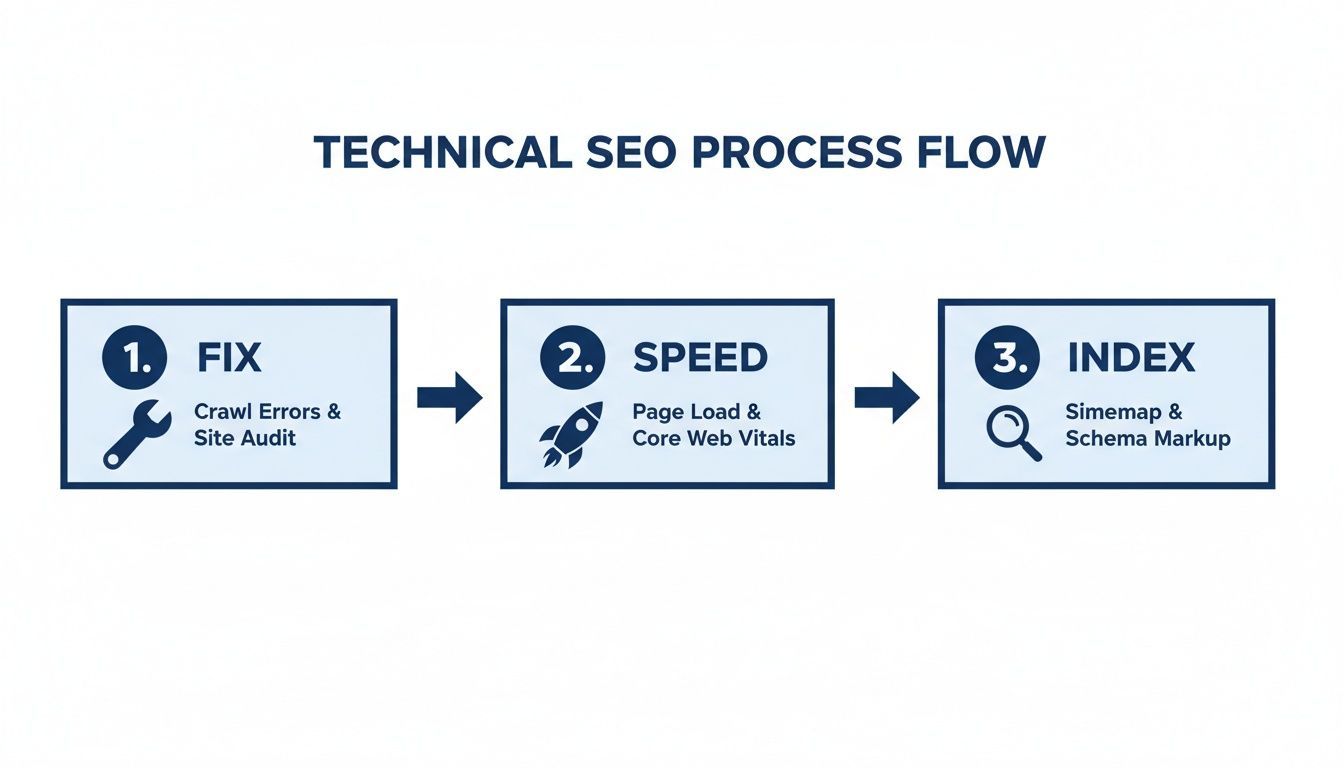
It's clear from the process: after you’ve squashed technical errors and boosted your speed, the game shifts to helping search engines understand your content. That’s exactly what great on-page SEO does.
Optimizing High-Impact Product and Collection Pages
Think of your product and collection pages as your most valuable digital real estate. They're the closest you get to a sale, so they have to be flawless. The best SEO for Shopify means treating these pages like conversion-focused landing pages, not just entries in a database.
First up, product descriptions. Ditch the manufacturer's copy. Now. Write something unique and persuasive that speaks directly to what your ideal customer actually wants and needs. Don't just list features—sell the benefits. A handbag isn't "made of Italian leather." It's an "heirloom-quality accessory crafted from supple Tuscan leather that develops a beautiful patina over time." See the difference?
Next, let's talk page titles and meta descriptions. These are your digital storefront signs in the search results. They need to be compelling enough to steal the click from your competitors.
- Page Titles: Make them descriptive, but also enticing. Instead of "Leather Tote Bag," go with something like "The Florence | Handcrafted Italian Leather Tote Bag | Brand Name." You get the keyword, the product name, and your brand in there for maximum impact.
- Meta Descriptions: This is your 155-character sales pitch. It needs to summarize the product's main benefit and include a clear call to action. Something like, "Discover timeless elegance. Shop now for free shipping."
A well-crafted title and meta description can dramatically increase your click-through rate from search results, even if your ranking doesn't change. It’s one of the highest-leverage, lowest-effort optimizations you can make.
Finally, high-quality, optimized images are non-negotiable. Use descriptive file names (like italian-leather-tote-bag-black.jpg) and fill out the ALT text for every single image. This not only helps you rank in image searches but also makes your site more accessible.
Leveraging Schema Markup for Rich Results
Schema markup is a bit of code that gives search engines more context about your page's content. Think of it like adding little explainer labels to your data. For a Shopify store, this is incredibly powerful because it can unlock rich results—those eye-catching search listings that show ratings, prices, and availability right on the results page.
It's been shown time and again that products with star ratings in the search results get significantly higher click-through rates. Implementing product schema allows your star reviews to show up directly on Google, giving you an instant edge.
You can also use schema for other types of content:
- Article Schema: Use this for your blog posts to signal to Google that the content is editorial.
- FAQ Schema: If a product page has a Q&A section, this can make your answers appear directly in search.
- Organization Schema: This reinforces your brand identity and key business info.
While many modern Shopify themes come with basic schema built-in, using a dedicated SEO app or some custom coding can give you more granular control. This ensures you're feeding Google the most detailed information possible.
Transforming Your Blog into a Sales Engine
Far too many brands treat their blog as an afterthought. For a premium Shopify store, your blog is a strategic weapon for capturing high-intent customers at every stage of their journey. Stop just announcing new products and start creating content that actually solves problems and builds authority.
A luxury skincare brand could write a guide on "Building the Perfect Anti-Aging Routine," weaving its products in naturally. A home contractor could publish "How to Choose the Right Countertops for a Modern Kitchen," establishing themselves as the go-to expert.
This kind of content attracts potential customers who are searching for solutions, not just products. You build a valuable audience at the top of the funnel that you can then nurture toward a purchase.
Building Authority with Links and Off-Page Signals
If your on-page SEO is the quality of your product and the design of your digital storefront, then off-page SEO is your brand’s reputation out in the real world. It’s the buzz, the press mentions, and the word-of-mouth that tells Google you’re a genuine authority. This isn't about chasing hundreds of low-quality links; it's about smart, strategic digital PR.
Every high-quality backlink from a respected website acts as a vote of confidence. It’s another credible source telling search engines they trust your brand. For a premium Shopify store, these endorsements are essential for building the kind of authority that drives high-value sales.
Think of it like this: a feature in a major industry magazine is far more valuable than a mention on some random blog. The same principle applies online. The goal is to land placements that elevate your brand’s prestige and build a powerful backlink profile that lasts.
Earning Links as a Premium Brand
Forget about risky, outdated tactics like buying links. For a luxury brand, the only sustainable approach is to earn links by creating real value. This means developing assets and building relationships that naturally attract attention from high-end publications, influential bloggers, and industry leaders.
Here are a few strategies that actually work for premium brands:
- Create Link-Worthy Assets: Develop exclusive content that people will want to reference. Think in-depth industry reports, beautifully designed guides, or a unique study based on your own data.
- Collaborate with Influencers: Partner with respected voices in your niche. Genuine collaborations often lead to high-quality backlinks and social proof that strengthens your authority.
- Strategic Digital PR: Actively pitch stories about your brand's unique craftsmanship, sustainable practices, or innovative products to relevant online magazines and news outlets.
When you're building this kind of authority, especially if your store uses partner programs, knowing how to handle affiliate links SEO is critical. Done wrong, they can hurt your rankings; done right, they contribute positively to your efforts.
The Power of Local SEO for Physical Stores
For premium brands with a brick-and-mortar presence, local SEO is an incredibly powerful tool for attracting affluent local shoppers. When someone searches for "luxury jewelry near me," you absolutely have to be the first and most trusted result they see. This is where your Google Business Profile (GBP) becomes your most important local asset.
An optimized Google Business Profile is like a digital concierge for your local storefront. It provides immediate answers—hours, location, reviews—and builds the confidence a customer needs to walk through your door.
Your GBP is so much more than a map listing. It’s a dynamic profile where you can showcase your best products, respond to customer reviews, and post updates. A fully optimized profile is a massive ranking factor in local search and a direct driver of foot traffic.
Actionable Steps for Local Dominance
To turn your Google Business Profile into a customer magnet, focus on these key areas:
- Complete Every Section: Fill out every single field available in your profile. The more information you give Google, the better it can understand and rank your business.
- Gather High-Quality Reviews: Actively encourage your happy customers to leave reviews. Positive reviews are one of the most powerful signals for local SEO success.
- Use Google Posts Weekly: Share updates about new products, in-store events, or special offers. This keeps your profile fresh and signals to both Google and customers that you are active.
- Upload Professional Photos: Show off your beautiful storefront, your products, and your team. High-quality visuals build trust and give people a reason to visit.
Choosing the Right Shopify SEO Apps and Tools
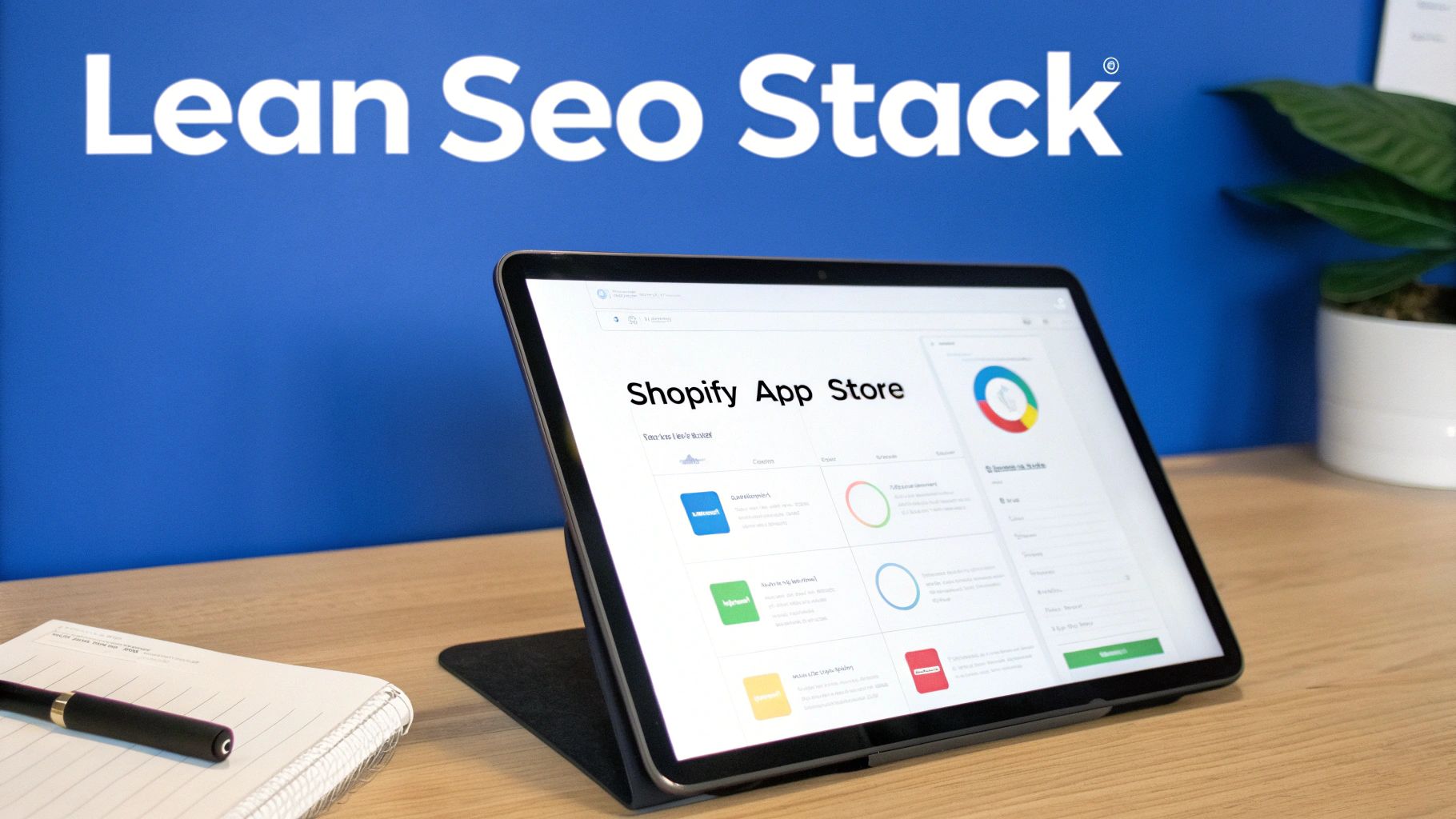
The Shopify App Store feels like a candy store for merchants. It's packed with thousands of tools promising to skyrocket your rankings. But be careful—it's easy to get caught up and fall into the "app bloat" trap. Installing too many apps can slow your site down, ruining the very user experience you've worked so hard to perfect. For premium brands, site performance is non-negotiable.
The secret to building the best SEO for Shopify is to create a lean, powerful stack of tools. Think quality over quantity. Select a few best-in-class apps that solve very specific problems, rather than a single generalist tool that does ten things poorly. Your goal is to add functionality without sacrificing the speed and clean code that Google loves.
Every app you install adds more code to your site, which can create conflicts or drag down your page load times. Before you click "install," ask yourself one simple question: "Does this app solve a critical SEO gap that my theme or Shopify's built-in features can't handle?" If the answer isn't a firm "yes," it's probably not worth the performance hit.
Essential App Categories for a Lean Stack
Instead of giving you a list of apps that will be outdated in six months, let's focus on the jobs your app stack needs to do. This approach helps you pick the right tools for your specific store while keeping things fast and clean.
- Advanced Schema Markup: While most modern themes handle basic schema, a dedicated app gives you precise control. You can create compelling rich results for product reviews, FAQs, and more, making your search listings impossible to ignore.
- Image Compression and Optimization: Gorgeous product photography is essential, but big image files are the number one killer of Shopify store speed. An app that automatically compresses and optimizes your images is an absolute must-have.
- Technical SEO Auditing: You need a tool that can scan for broken links, spot redirect issues, and help you manage your
robots.txtfile. These are invaluable for keeping your site technically sound.
A common mistake is installing multiple apps with overlapping features. I've seen stores with three different image optimizers running at once! Do a quick app audit every few months to make sure each tool serves a distinct and necessary purpose. This simple habit prevents performance drag and keeps your store running smoothly.
When you're looking at a new app, it pays to be critical. Not all apps are created equal, and some can do more harm than good by slowing down your site or causing code conflicts.
Shopify SEO App Evaluation Checklist
| Evaluation Criteria | What to Look For | Red Flags |
|---|---|---|
| Performance Impact | Look for reviews mentioning "fast," "lightweight," or "no impact on speed." Check the developer's notes on performance. | Multiple reviews complain about the app slowing down their store. |
| Core Functionality | Does it solve one specific, crucial problem exceptionally well? | Tries to be an "all-in-one" solution, often leading to mediocre performance across the board. |
| Code Quality | The app should inject code cleanly and asynchronously (not blocking the rest of the page from loading). | Uses outdated libraries or injects "render-blocking" scripts that halt page loading. |
| Support & Updates | The developer is responsive and has a history of regular updates and bug fixes. | The last update was over a year ago, or reviews consistently mention poor or non-existent support. |
| Uninstall Process | Does the app offer a clean uninstall process that removes all its code snippets? | Users report that code is left behind after uninstallation, requiring manual cleanup. |
Using this checklist helps you make informed decisions, ensuring any app you add is a net positive for your store's SEO and overall health.
Beyond the App Store: Essential External Tools
While Shopify apps handle on-site tasks, your most powerful insights will come from external platforms. These are the tools that give you the data to make smart decisions, track your progress, and find opportunities your competitors are missing. Think of them as the command center for your entire SEO strategy.
Your core external toolkit should include:
- Google Search Console: This is your direct line to Google. It’s completely free and gives you critical data on your site's health, keyword performance, and indexing status. It's non-negotiable.
- Ahrefs or Semrush: These are the industry-standard platforms for competitive analysis, keyword research, and backlink tracking. An investment in one of these gives you a 360-degree view of the search landscape.
- Google Analytics: This is the definitive source for understanding how users actually behave on your site, which channels drive revenue, and where you can improve the customer journey.
These platforms work together to give you the full picture. For example, you might use Ahrefs to discover a high-value keyword, optimize a page for it using your on-site tools, and then track its performance and click-through rate in Google Search Console.
You can learn more about finding the right tools for your specific needs by exploring various website speed optimization tools and seeing how they impact performance. By combining a few strategic Shopify apps with these essential external platforms, you create a powerful, efficient system that drives real, measurable growth without weighing your store down.
Measuring Success and Prioritizing for Growth
Getting the best SEO for Shopify is more than just flipping switches and publishing content; it demands a relentless focus on results. This is where we tie every technical tweak and content update directly to your bottom line.
Success isn't about traffic for traffic's sake. True growth comes from tracking the key performance indicators (KPIs) that actually move the needle for your business. Instead of getting lost in vanity metrics, you need to zero in on what truly matters. This shifts your whole perspective from just getting more visitors to attracting the right visitors—the ones ready to buy.
Key Performance Indicators That Drive Revenue
To measure the real impact of your SEO work, build your reporting around these three critical metrics. They give you a clear, unfiltered view of how your search performance is contributing to sales.
- Organic Revenue: This is the big one. It's the total sales generated directly from visitors who found your store through organic search. No fluff, just the money in the bank from your SEO efforts.
- Organic Conversion Rate: This number tells you how well your search traffic turns into paying customers. A rising conversion rate is a fantastic sign that you're not just getting more traffic, but better, more qualified traffic.
- Rankings for High-Value Keywords: Keep a close eye on your position for commercial-intent keywords. These are the searches that signal a strong desire to buy, like "buy [product name]" or "[brand] vs [competitor brand]."
Focusing on these KPIs ensures every minute you spend on SEO is aimed squarely at delivering a measurable return.
SEO without measurement is just guesswork. The difference between a good strategy and a great one is the ability to prove its financial impact with cold, hard data from organic revenue and conversions.
Creating a Prioritized Action Plan
Once you have clear data, you can stop guessing what to do next. Think of it as a monthly SEO health check that gives you a framework for continuous improvement. Start by reviewing your core KPIs. Did organic revenue go up? Did rankings for your top commercial keywords improve?
From there, you can run simple A/B tests to see what works. For example, try testing different page titles for your best-selling products. Your goal is to see which one earns a higher click-through rate from the search results page. Even a small bump in CTR can lead to a significant increase in qualified traffic and sales over time.
This cycle of measuring, testing, and refining is the engine of sustainable growth. It helps you pinpoint the most impactful changes you can make right now, ensuring your Shopify store not only competes but dominates in the search results that matter most.
At KN Digital, we build elegant “digital flagship” experiences that elevate brand prestige and convert visitors into loyal customers. If you're ready to drive measurable growth, let's talk about redesigning your website for results. Learn more about our conversion-focused web design services.