
In the competitive digital real estate market, a generic website isn't enough. A dedicated, conversion-focused landing page is your most powerful tool for turning ad clicks, social media traffic, and search queries into qualified leads. Whether you're promoting a luxury listing, generating sign-ups for an open house, or building an email list for a new development, the right landing page isolates your offer and guides visitors toward a single, valuable action. It's the digital equivalent of a private showing, designed to capture attention and convert interest into opportunity.
This guide moves beyond surface-level inspiration to provide a strategic breakdown of high-performing real estate landing page examples. We dissect the critical conversion elements that compel visitors to act, from the initial impact of the hero section to the final click on a call-to-action. A crucial element of this visual persuasion involves compelling imagery, and mastering essential real estate photography tips can dramatically increase your page's effectiveness and perceived value.
We'll analyze the anatomy of success for each example, focusing on:
- Lead Capture Mechanics: How do they make it easy and appealing to submit information?
- Trust Signals: What elements build credibility and reduce friction?
- UX & Design: How does the layout guide the user journey?
Instead of just showing you what works, we'll explain why it works and provide a blueprint with actionable takeaways you can apply to your own agent, listing, or brokerage pages. Each analysis includes annotated screenshots and direct links, giving you a replicable framework for building landing pages that don't just look good, but actively grow your business by turning browsers into buyers.
1. Launching a Real Estate Startup’s Digital Presence in Just 4 Weeks
KN Digital’s case study provides a masterclass in launching a conversion-focused digital presence with remarkable speed. This project is one of the best real estate landing page examples for startups and property managers who need to establish credibility and generate leads immediately. Instead of just a theoretical design, this is a real-world application that transformed an Airbnb listing portfolio into a polished, direct-booking engine in just four weeks.
The primary goal was clear: create a premium, high-performing "digital flagship" that not only looks professional but also functions as a powerful lead-generation tool from day one. It demonstrates how to bypass months of development to get a minimum viable product (MVP) to market that starts delivering business value right away.
Website: Launching a Real Estate Startup’s Digital Presence in Just 4 Weeks
Strategic Breakdown
This landing page excels by focusing on three core pillars: speed, conversion, and integration. It solves a critical problem for new real estate ventures: how to look established and trustworthy while operating on a startup's timeline and budget.
- Conversion-First Design: The user experience is meticulously crafted to guide visitors toward a single action: inquiring or booking. The layout uses a clean, modern aesthetic with high-quality property visuals, clear calls-to-action (CTAs), and strategically placed lead capture forms. This intentional design reduces friction and maximizes the probability of a user converting.
- Seamless Airbnb Integration: A key differentiator is the direct integration with Airbnb. This feature automatically syncs property listings, availability, and details. This not only saves significant administrative time but also ensures the information presented to visitors is always accurate and up-to-date, building trust through transparency.
- Prominent Social Proof: The page effectively leverages trust signals to overcome the credibility gap new brands often face. Testimonials, reviews, and professional branding are woven into the design, assuring potential clients that they are dealing with a reputable operator.
Key Insight: The KN Digital approach proves that a powerful digital launch doesn't require a massive, months-long project. By focusing on a core set of high-impact features like API integration and conversion-optimized UX, new brands can compete effectively and start capturing leads almost instantly.
Actionable Takeaways for Your Landing Page
This case study offers a replicable blueprint for launching a successful real estate landing page. Here are a few key strategies you can adapt:
- Prioritize an MVP Launch: Focus on the essential features needed to generate leads. For most real estate businesses, this includes high-quality imagery, a clear value proposition, an easy-to-use contact form, and strong social proof. Launch quickly and iterate based on user data.
- Automate Your Listings: If you list properties on multiple platforms like Airbnb or VRBO, use integrations to sync data automatically. This reduces manual work and ensures consistency, which is crucial for building user trust and improving operational efficiency.
- Optimize the Lead Capture Flow: Once a lead is captured, the follow-up process is critical. A fast response time can be the difference between securing a client and losing them. After successfully attracting prospects with a high-converting landing page, ensuring no lead is missed requires a reliable system, such as a dedicated Answering Service for Real Estate.
- Plan for Post-Launch Growth: A great landing page is just the beginning. The initial launch provides a platform for data collection and optimization. Plan for ongoing activities like A/B testing headlines, refining CTAs, and investing in targeted traffic sources. To dive deeper, explore these proven real estate lead generation strategies to build a sustainable pipeline.
By combining rapid execution with data-driven design, this example from KN Digital sets a new standard for what real estate landing pages can achieve.
2. ThemeForest (Envato Market)
ThemeForest, part of the Envato Market ecosystem, serves as a vast digital marketplace for website templates, including a massive selection of real estate landing pages. Unlike hosted builders, ThemeForest offers individual, downloadable templates built on various technologies like HTML, React, and popular CMS platforms like WordPress. This makes it an ideal source for developers, agencies, or marketing teams needing a pre-designed foundation for a specific campaign, such as promoting a new listing or an open house event.
The platform's primary strength lies in its sheer volume and affordability. Users can filter through thousands of options, preview live demos, and read customer reviews before making a one-time purchase. This model is perfect for rapid deployment, allowing a team to acquire a visually appealing design and customize it for a campaign without the recurring costs of a subscription-based service.
Strategic Breakdown
- Use Case: Best suited for one-off projects, time-sensitive campaigns, or teams with development resources. A perfect example is a real estate agent needing a quick, dedicated page for a high-value property that requires more visual flair than a standard MLS listing.
- Cost Structure: Templates are sold with a one-time licensing fee, often ranging from $10 to $70. This provides a low-cost entry point but doesn't include hosting, domain registration, or implementation, which are the buyer's responsibility.
- Quality & Support: The quality of templates can vary significantly between authors. It's crucial to check an item's sales count, user ratings, and the author's support history before purchasing. Support is typically provided by the template creator, not ThemeForest itself.
Key Takeaways & Actionable Insights
For teams evaluating their options, the decision often comes down to budget, timeline, and technical skill. While templates from ThemeForest offer speed and affordability, they require a hands-on approach to deployment and maintenance. For a deeper analysis of this trade-off, understanding the differences between a pre-built theme and a bespoke solution is essential; this guide on custom vs. template websites offers a comprehensive breakdown.
Pro-Tip: Always check the "last updated" date on a template. A recently updated template is more likely to be compatible with the latest web standards and browser versions, reducing potential technical issues after launch.
Visit Website: ThemeForest (Envato Market)
3. Webflow Templates Marketplace
The Webflow Templates Marketplace offers a curated collection of professionally designed templates built specifically for Webflow's powerful no-code visual editor. This platform is an excellent resource for real estate agents, brokerages, and property firms that prioritize high-end design and seamless integration with a robust CMS. Unlike marketplaces offering static HTML files, Webflow templates provide a dynamic foundation that combines visual polish with powerful backend functionality, making it ideal for luxury brands wanting to manage listings and marketing content without writing code.
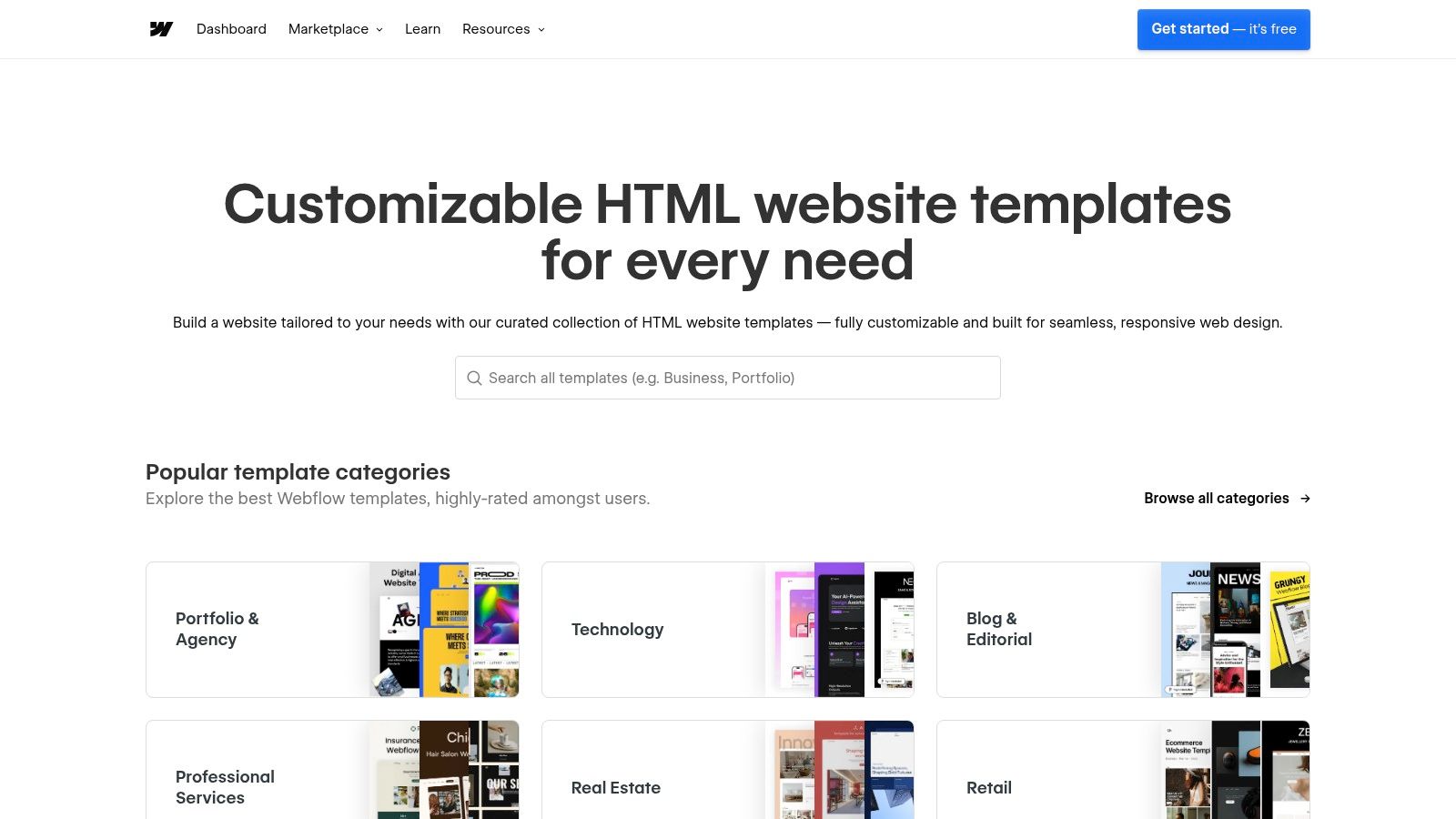
Its core advantage lies in the marriage of aesthetic quality and technical capability. Users can preview templates in a live environment and, for eligible ones, even clone them into their Webflow account to experiment before purchasing. This streamlined workflow allows marketers and designers to rapidly iterate on high-fidelity real estate landing page examples and publish them directly to Webflow’s high-performance hosting CDN, ensuring fast load times and a premium user experience.
Strategic Breakdown
- Use Case: Best for design-conscious real estate brands, brokerages, and developers needing a visually stunning and easily editable website. It's perfect for creating a main brokerage site, a dedicated page for a new luxury development, or an agent’s personal brand portfolio.
- Cost Structure: Templates involve a one-time purchase fee, typically ranging from $49 to $129. This cost is separate from Webflow's ongoing subscription plans, which are required for hosting and unlocking the platform's full capabilities.
- Quality & Support: The design and build quality are consistently high due to Webflow's submission standards. Support is provided directly by the template designer, whose responsiveness and ratings are displayed on the template's product page for transparency.
Key Takeaways & Actionable Insights
For teams prioritizing brand image and operational efficiency, Webflow presents a compelling middle ground between template-based sites and fully custom development. The platform's visual editor empowers teams to make design changes on the fly, a significant advantage for dynamic real estate marketing campaigns. The integrated CMS is particularly powerful for managing property listings, agent profiles, and blog content in a structured way.
Pro-Tip: Before purchasing, use the "Live Preview" feature extensively and check the template's "changelog." A well-maintained template with regular updates signals a committed designer and ensures long-term compatibility with Webflow's evolving features.
Visit Website: Webflow Templates Marketplace
4. Leadpages Templates
Leadpages is a well-known hosted landing page builder that offers a specific catalog of real estate landing page templates designed for rapid deployment. Unlike marketplaces that sell standalone files, Leadpages provides an all-in-one solution. This includes the builder, hosting, lead capture forms, and integrations, making it ideal for agents or marketing teams who want to launch campaigns quickly without needing a developer. The platform is built around converting visitors into leads.
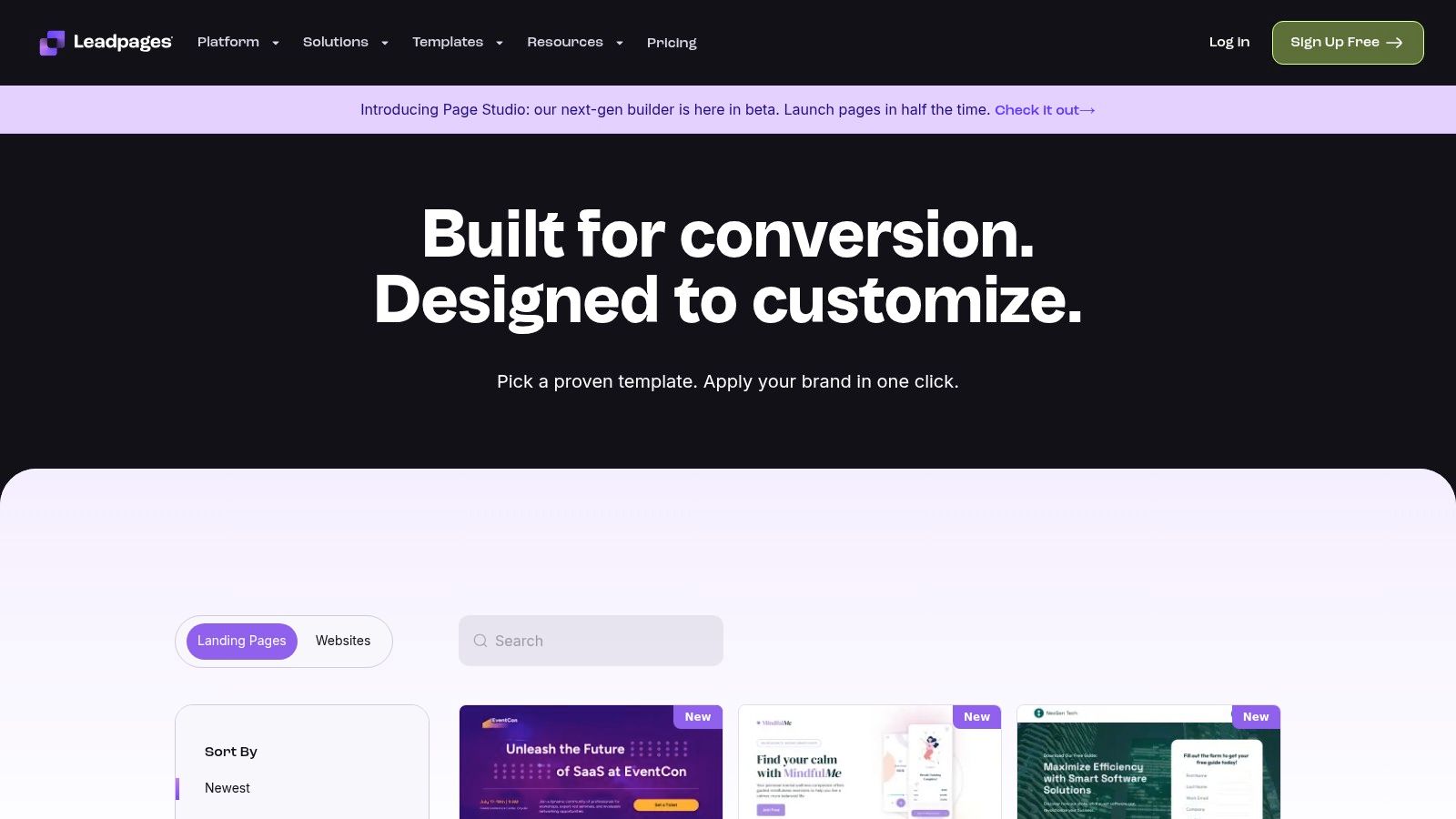
The primary advantage of Leadpages is its integrated nature and ease of use. Users can select a real estate template for a specific goal, like promoting a new listing, capturing seller leads with a home valuation offer, or scheduling property tours. The platform’s built-in tools for creating pop-ups, alert bars, and connecting directly to CRMs or email marketing services streamline the entire lead generation process from a single dashboard. This makes it a powerful tool for marketers focused purely on performance and lead volume.
Strategic Breakdown
- Use Case: Excellent for solo agents, small teams, or marketers needing to launch multiple, conversion-focused campaigns without technical overhead. It's perfect for creating pages for lead magnets (e.g., "free home valuation guide"), property listings, and tour request forms.
- Cost Structure: Leadpages operates on a subscription model with tiered pricing, starting with a 14-day free trial. The entry-level plan is cost-effective but may limit the number of sites you can publish on, while higher-tier plans unlock A/B testing, more integrations, and unlimited traffic.
- Quality & Support: The templates are professionally designed and mobile-responsive. Because Leadpages is a hosted service, support is centralized and provided directly by their team, offering a more consistent and reliable experience compared to third-party marketplaces.
Key Takeaways & Actionable Insights
For agents prioritizing speed, simplicity, and built-in marketing tools, Leadpages presents a compelling value proposition. The trade-off is that your pages are tied to its ecosystem; migrating away requires rebuilding them elsewhere. This approach aligns perfectly with the principles of conversion-focused website design, where the primary goal is to guide user action effectively. The integrated A/B testing on higher plans is a significant advantage for optimizing your real estate landing page examples for maximum lead capture.
Pro-Tip: Use the built-in pop-up and alert bar features to promote a time-sensitive offer, such as an upcoming open house or a limited-time consultation. This can significantly increase engagement without cluttering the main page design.
Visit Website: Leadpages Templates
5. Unbounce
Unbounce is a powerful, conversion-focused landing page platform designed for marketers and agencies who need to build, test, and optimize pages without developer intervention. Rather than just offering templates, Unbounce provides a comprehensive suite of tools, including a drag-and-drop builder, built-in A/B testing, and AI-powered copywriting assistance. This makes it a go-to solution for real estate professionals running paid advertising campaigns who need to maximize lead generation from every click.
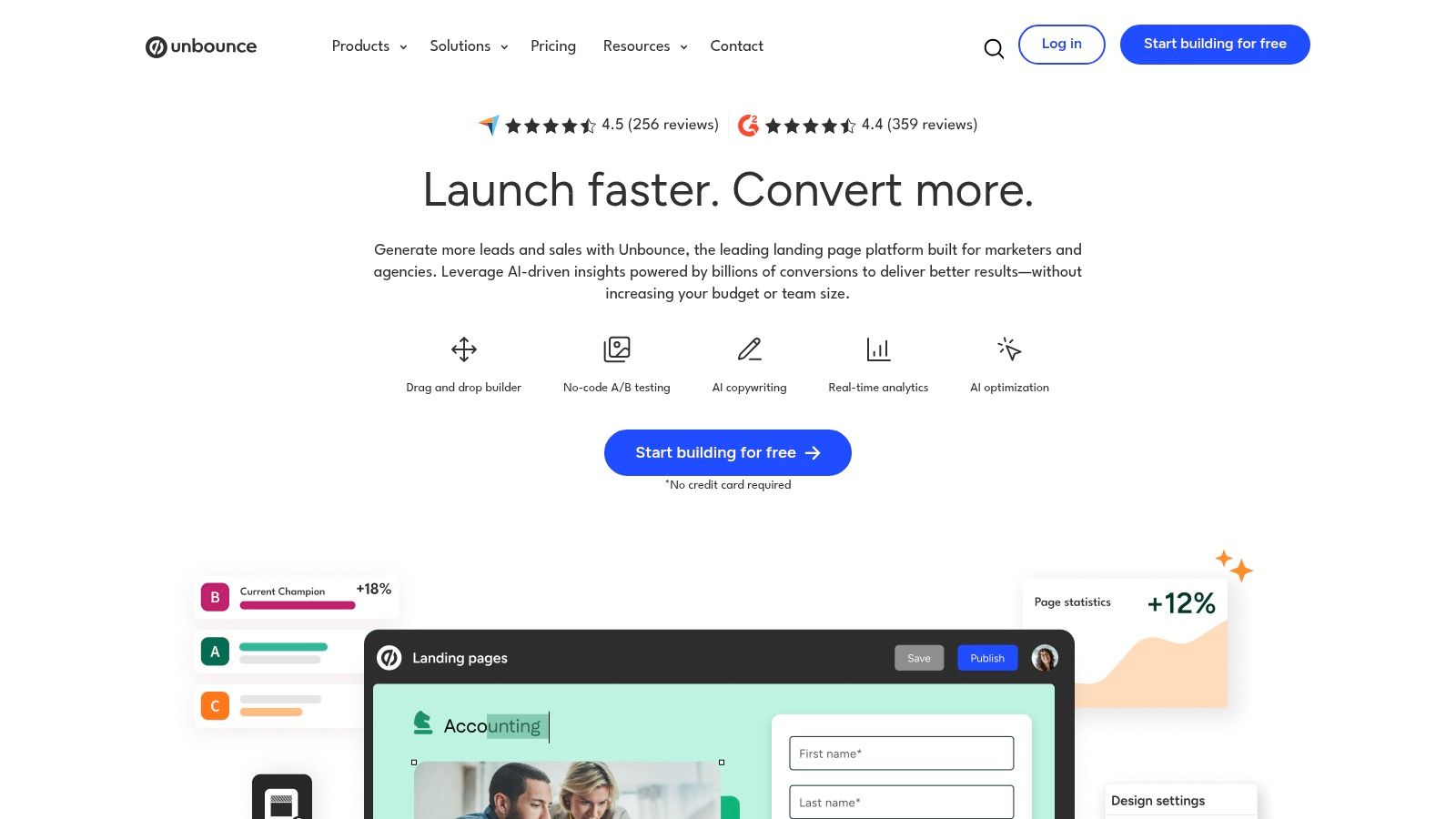
The platform's core strength is its obsessive focus on conversion optimization. Features like Smart Traffic automatically route visitors to the page variant most likely to convert for them, moving beyond traditional A/B testing. For real estate, this could mean showing different hero images or calls-to-action based on a user's device or location, directly impacting lead quality and volume from sources like Google Ads or Facebook campaigns.
Strategic Breakdown
- Use Case: Ideal for marketing teams, agencies, and individual agents heavily invested in paid advertising. It's perfectly suited for creating high-converting pages for specific listings, lead magnet offers (like a "local market report"), or new development promotions where performance tracking is critical.
- Cost Structure: Unbounce operates on a subscription model with tiered pricing based on traffic volume and feature access. Plans typically have visitor and conversion limits, with potential overage fees for high-traffic campaigns. This structure is best for those with a consistent campaign budget.
- Quality & Support: As a mature and reputable platform, Unbounce offers high-quality, mobile-responsive templates and robust performance. Customer support is well-regarded, providing resources and assistance to help users improve their conversion rates, a key differentiator from template marketplaces.
Key Takeaways & Actionable Insights
Unbounce is an investment in optimization, not just a page builder. For real estate professionals, this means moving beyond simply having a page to actively improving its performance. The platform is best for those who understand the value of a single lead and are willing to test and refine their approach to acquire more of them efficiently. The built-in tools remove the technical barriers to sophisticated marketing tactics.
Pro-Tip: Use the A/B testing feature to test your primary headline against a benefit-driven alternative. For a new listing page, compare "123 Maple Street | 4 Bed, 3 Bath" with "Your Dream Family Home with a Pool-Ready Backyard." This simple test can reveal what messaging resonates most with your target buyers.
Visit Website: Unbounce
6. Instapage
Instapage is an advanced landing page platform engineered for performance, scale, and collaboration, making it a powerful tool for larger real estate agencies, development firms, and marketing teams managing significant ad spend. Unlike simpler builders, Instapage focuses on enterprise-level features like server-side A/B testing, reusable "Instablocks" for brand consistency, and real-time collaboration tools. This positions it as a go-to solution for organizations running sophisticated, multi-property marketing campaigns that demand speed and precision.
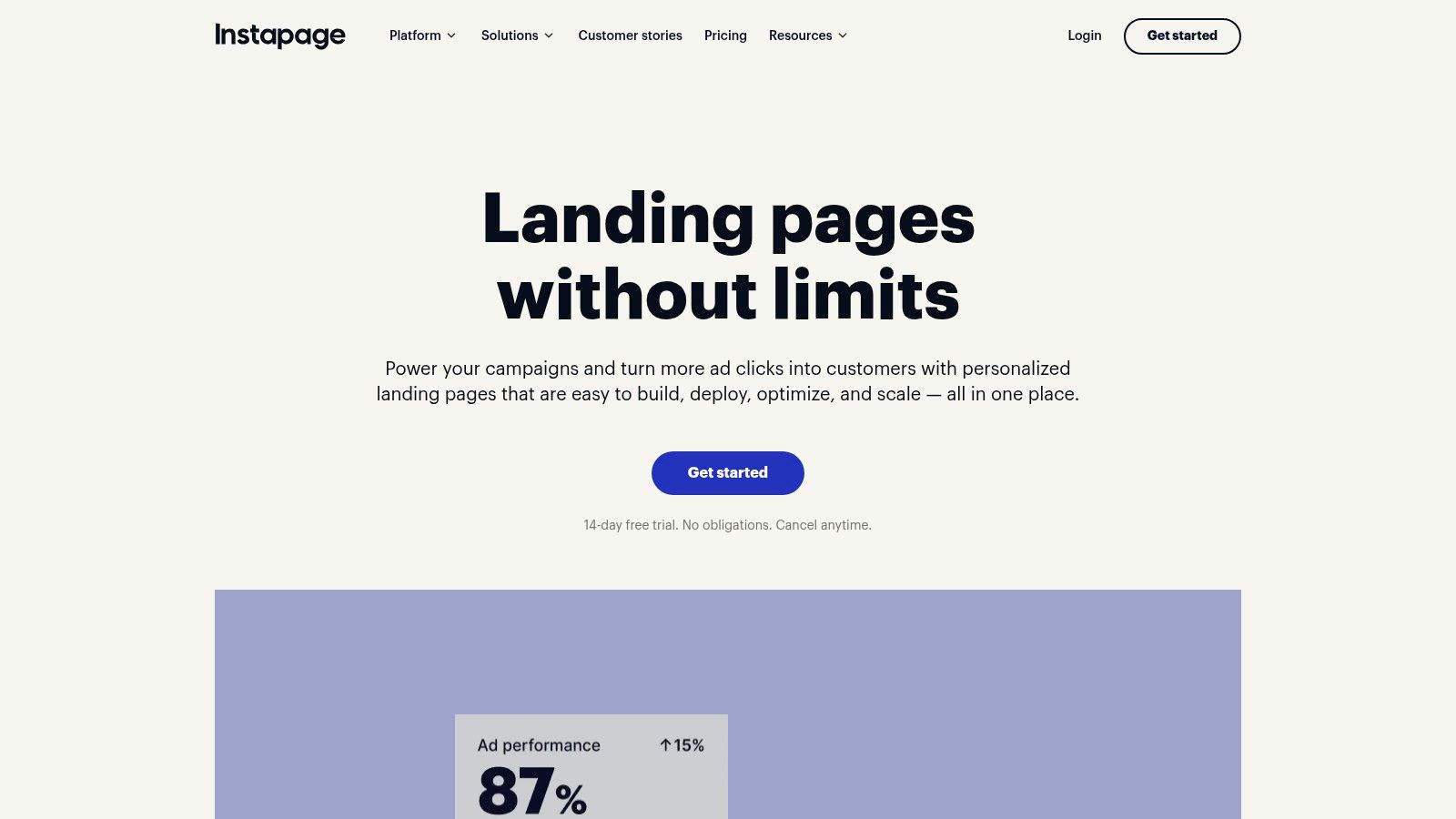
The platform's core strength is its ability to streamline the entire landing page lifecycle, from creation to optimization. With over 500 layouts, including specific real estate landing page examples, teams can rapidly deploy and then rigorously test variations. Features like server-side experimentation prevent the "flicker" effect common in client-side testing, ensuring a seamless user experience and more accurate data for high-stakes campaigns.
Strategic Breakdown
- Use Case: Ideal for large-scale operations like a national brokerage promoting agents in multiple regions or a property developer launching several projects simultaneously. The Global Blocks feature allows a team to update a single element (like a logo or legal disclaimer) and have it instantly reflect across hundreds of pages.
- Cost Structure: Instapage operates on a subscription model with tiered pricing. Its plans are positioned at a premium compared to small business-focused builders, reflecting its advanced feature set, and often include traffic caps that align with high-volume advertising needs.
- Quality & Support: The platform is known for its robust performance, fast page-load speeds, and reliable infrastructure. Support is geared towards professional teams, offering resources and assistance to ensure campaigns run smoothly. While it has a vast template library, finding real estate-specific ones requires some filtering.
Key Takeaways & Actionable Insights
For a brokerage or development firm, the decision to use Instapage hinges on the need for scalability and optimization. Its toolset is built to maximize conversion rates from paid traffic, making it a strategic investment rather than just a page builder. The collaboration features are particularly valuable for teams with separate design, copy, and marketing roles, as they allow for a streamlined workflow with real-time feedback.
Pro-Tip: Leverage the Instablocks (or Global Blocks) feature from day one. Create standardized blocks for agent bios, property feature lists, contact forms, and testimonials. This not only saves immense time when launching new real estate landing page examples but also ensures brand and messaging consistency across all campaigns.
Visit Website: Instapage
7. Creative Market
Creative Market is a curated digital marketplace where independent creators sell high-quality, design-forward assets. For real estate professionals, it offers a boutique selection of website and landing page templates, particularly for platforms like Squarespace and Canva. Unlike the vast, sometimes overwhelming libraries of larger marketplaces, Creative Market focuses on unique, brand-centric designs that are perfect for establishing a premium or luxury aesthetic without the cost of a full-service design agency.
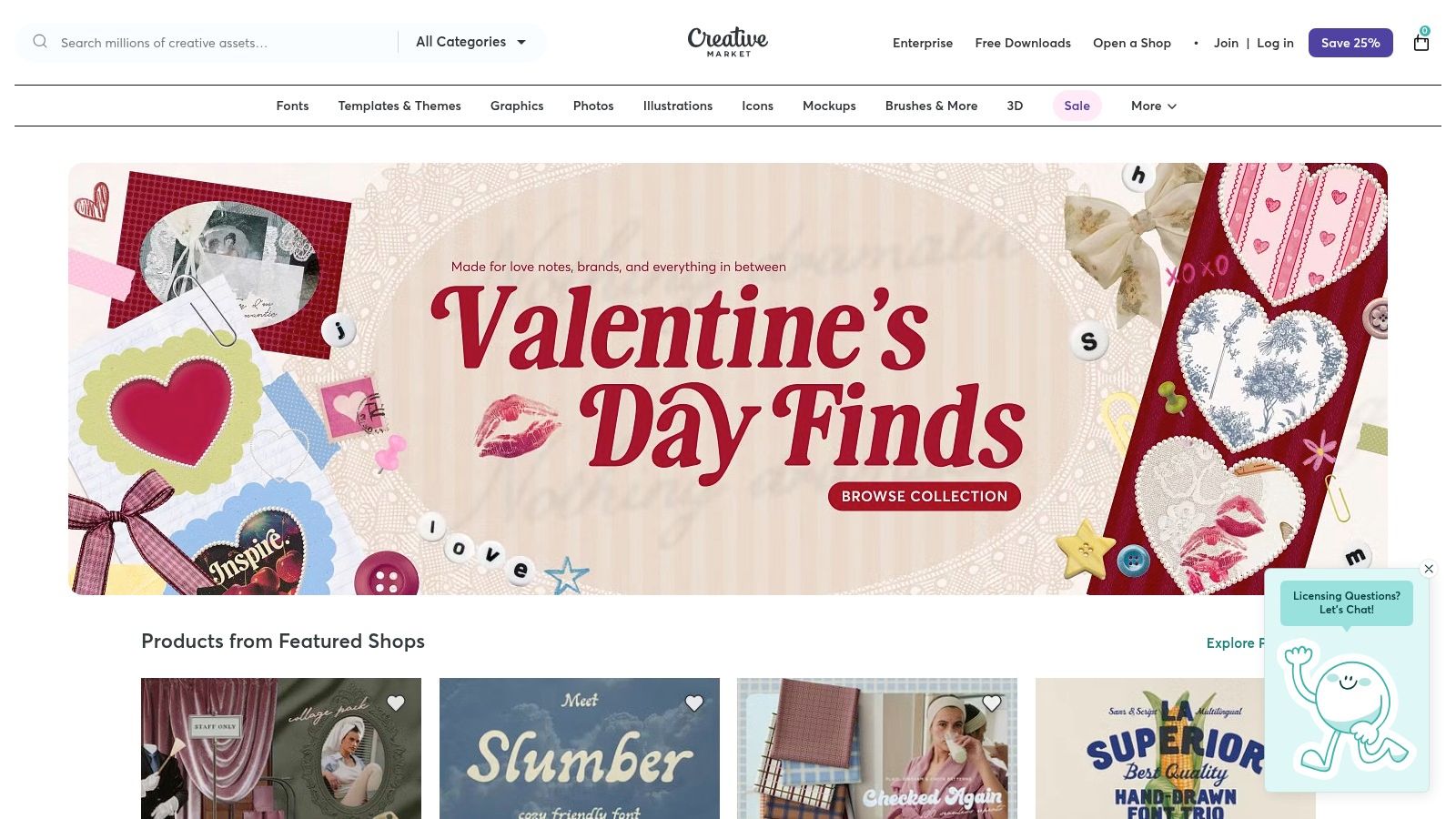
The platform's strength lies in its strong emphasis on aesthetic quality and usability for non-developers. Many templates are built for user-friendly platforms, allowing agents and small firms to achieve a polished, custom look with minimal technical skill. The direct-from-designer model also means buyers can often access add-on services like installation or customization, providing a middle ground between a DIY template and a full agency project.
Strategic Breakdown
- Use Case: Ideal for solo agents, boutique brokerages, or luxury property developers who want a distinctive online brand presence. A great fit for creating a sophisticated agent bio page, a high-end property feature page, or a stylish real estate landing page without writing code.
- Cost Structure: Templates are sold via a one-time licensing fee, typically ranging from $50 to over $200. This purchase does not include the necessary subscription to the platform the template is built for (e.g., Squarespace), hosting, or a domain name.
- Quality & Support: Quality is consistently high due to the curated nature of the marketplace. Support is handled directly by the individual template designer, which can be a significant advantage as you get help from the person who built the product. Always check a seller's reviews and response times before purchasing.
Key Takeaways & Actionable Insights
For those looking to create premium real estate landing page examples, Creative Market provides an excellent starting point. It bridges the gap between generic templates and expensive custom design, offering a unique visual identity that aligns with high-end branding. The key is to find a template built for a platform you are comfortable using, as you will be responsible for the final implementation and content integration.
Pro-Tip: Before buying a template, carefully review the live demo on both desktop and mobile devices. Also, read the product description thoroughly to understand what is included (e.g., fonts, images) and what software or platform versions are required for compatibility.
Visit Website: Creative Market
Top 7 Real Estate Landing Page Sources Comparison
| Option | Implementation Complexity (🔄) | Resource Requirements (⚡) | Expected Outcomes (📊) | Ideal Use Cases & Key Advantages (💡⭐) |
|---|---|---|---|---|
| Launching a Real Estate Startup’s Digital Presence in Just 4 Weeks | 🔄 Moderate — agency‑led, focused landing‑page MVP | ⚡ Fast launch; agency cost + ongoing CRO/SEO support | 📊 Rapid time‑to‑market, conversion‑focused lead generation | 💡 Startups needing a polished, integrated flagship quickly; ⭐ Airbnb integration, agency UX/process, post‑launch optimization (⭐⭐⭐⭐) |
| ThemeForest (Envato Market) | 🔄 Low — buy template, then self‑implement | ⚡ Low upfront cost; requires hosting and developer for deployment | 📊 Fast deployment but quality varies by author | 💡 One‑off campaigns or tight budgets; ⭐ Huge selection and low price (⭐⭐⭐) |
| Webflow Templates Marketplace | 🔄 Low — no‑code editing within Webflow | ⚡ Template cost + optional Webflow hosting; easy visual edits | 📊 Polished visuals and responsive CMS when hosted on Webflow | 💡 Luxury brands wanting rapid design iteration; ⭐ High design quality and hosted performance (⭐⭐⭐⭐) |
| Leadpages Templates | 🔄 Very low — hosted builder, turnkey | ⚡ Subscription includes hosting, forms, A/B testing | 📊 Quick lead capture and publishable pages; limited portability | 💡 Solo agents/small teams needing managed landing pages; ⭐ Built‑in lead tools and CRM integrations (⭐⭐⭐) |
| Unbounce | 🔄 Moderate — conversion‑focused builder with features | ⚡ Paid plans; strong optimization tools; visitor limits apply | 📊 Improved conversion via A/B testing and integrations | 💡 Agencies/marketers running paid campaigns; ⭐ Robust optimization toolkit and scale (⭐⭐⭐⭐) |
| Instapage | 🔄 Moderate–High — enterprise features and governance | ⚡ Higher cost; collaboration and scale tools for teams | 📊 High performance for large ad funnels; reliable experiment history | 💡 Enterprises/multi‑property rollouts needing governance; ⭐ Server‑side testing, Global Blocks, collaboration (⭐⭐⭐⭐) |
| Creative Market | 🔄 Low — purchase designer templates, then implement | ⚡ One‑time purchase; requires compatible platform (e.g., Squarespace) | 📊 Distinctive, brand‑forward aesthetics; platform setup required | 💡 Teams seeking boutique, luxury looks without agency fees; ⭐ Designer quality and licensing (⭐⭐⭐) |
Building Your Next Lead-Generating Asset
We've explored a comprehensive collection of real estate landing page examples, dissecting what makes them effective lead-generation machines. From the rapid deployment offered by ThemeForest and Leadpages templates to the sophisticated customization and A/B testing capabilities of platforms like Unbounce and Instapage, the path to a high-converting page is diverse. The key takeaway is that success isn't tied to a single tool but to the strategic principles applied.
Across every successful example, a clear pattern emerges. The most effective pages combine a compelling, singular offer with an elegant, frictionless user experience. They understand their audience intimately, speaking directly to their needs with powerful headlines, high-quality visuals, and strategically placed social proof that builds immediate trust.
Distilling the Core Conversion Principles
As you embark on creating your own landing page, remember to distill the lessons from these examples into a cohesive strategy. The most critical elements are not just aesthetic but deeply psychological and functional.
Focus your efforts on these foundational pillars:
- Message Match: Ensure the promise made in your ad or link is immediately fulfilled by the headline and hero section of your landing page. Discrepancies create confusion and increase bounce rates.
- Visual Hierarchy: Guide the user's eye intentionally. The most important elements, like the value proposition and the call-to-action button, should be the most prominent. Use color, size, and whitespace to create a clear path to conversion.
- The "One Page, One Goal" Rule: Avoid the temptation to clutter your landing page with multiple offers or navigation links that lead users away. Every single element should support the primary conversion goal, whether it's capturing an email, scheduling a viewing, or downloading a guide.
- Frictionless Forms: Keep your lead capture forms as simple as possible. Only ask for the information you absolutely need. For longer forms, consider using a multi-step approach to reduce initial cognitive load and increase completion rates.
From Inspiration to Implementation: Your Actionable Next Steps
Reviewing powerful real estate landing page examples is the first step. The next is to translate that inspiration into a tangible asset for your business. Before you select a tool or build a single element, start with a clear, strategic plan.
- Define Your Ideal Visitor: Who are you trying to attract? A first-time homebuyer? A luxury investor? A potential renter? Your answer will dictate the tone, imagery, offer, and trust signals you use.
- Solidify Your Unique Offer: What is the single most compelling thing you can offer this visitor in exchange for their information? This could be a free home valuation, exclusive access to off-market listings, or a detailed neighborhood guide.
- Map the User Journey: How will visitors arrive on this page? What is the next logical step you want them to take after converting? Understanding the entire funnel ensures your landing page is an effective bridge, not a dead end.
- Choose the Right Tool for the Job:
- For speed and budget-friendliness, start with a high-quality template from ThemeForest or Leadpages.
- For design flexibility and CMS integration without deep coding, Webflow is an exceptional choice.
- For serious marketers focused on A/B testing and optimization, platforms like Unbounce and Instapage provide the robust tools needed to maximize ROI.
By grounding your design and development process in these strategic steps, you move beyond simply copying what looks good and start building a landing page engineered for performance. The goal is to create a digital asset that not only represents your brand with polish and professionalism but also consistently delivers qualified leads into your pipeline.
A well-designed landing page is more than a digital brochure; it's a strategic asset that turns clicks into clients. At KN Digital, we specialize in crafting these high-performance digital experiences for premium real estate brands, moving beyond templates to build custom lead-generation funnels that drive measurable growth. If you’re ready to transform your online presence with a data-driven approach, explore how we can help at KN Digital.