
When someone's looking for an engagement ring or a custom necklace, they aren't just buying a product; they're investing in a milestone. SEO for jewelers is all about making sure your brand shows up for those incredibly important moments. It's the art of connecting your craftsmanship with people who are actively searching for what you offer, right when they're ready to buy.
Plain and simple, SEO is the difference between being a hidden gem and the most in-demand showroom in town.
Your Digital Showroom: Why SEO Is Non-Negotiable for Jewelers
In the luxury market, your website isn't just an online catalog anymore. It's your flagship digital showroom. For a discerning client, the path to a major purchase—whether it's an heirloom watch or a diamond ring—almost always starts with a Google search. A strong, visible online presence isn't just a nice-to-have; it's fundamental to your growth.
The numbers don't lie. The global jewelry market is set to hit a staggering US$391.28 billion by 2026, and a huge chunk of that is happening online. In fact, online jewelry retail is growing at a blistering 13.8% CAGR. That completely blows away the 5% growth we're seeing in traditional brick-and-mortar stores. If you want to see the full breakdown, check out this jewelry market size report.
For jewelers, this means SEO is the engine that drives visibility in a very crowded, very sparkly market.
The Modern Customer Journey
Today's luxury buyer is smart and digitally fluent. Long before they even think about walking into a physical store, they've already been busy online.
- They've done extensive research, comparing everything from diamond cuts and metal types to brand reputations.
- They've scoured reviews and testimonials, looking for social proof to build confidence in a jeweler's credibility.
- They've looked for local experts with searches like "custom jewelry design near me" or "engagement ring stores in [City]."
If your SEO isn't up to scratch, you're completely absent from these critical discovery phases. You're invisible to a massive pool of high-intent customers.
SEO for jewelers is about so much more than traffic. It’s about strategically positioning your brand as the definitive authority and the trusted choice for a customer’s most meaningful purchases. It builds the digital trust that absolutely must precede a luxury sale.
To help you get there, let's take a high-level look at the core areas we'll be covering. This isn't just theory; it's a practical breakdown of what works.
Key SEO Focus Areas for Jewelers at a Glance
This table summarizes the core SEO pillars we'll dive into, showing you exactly what the goal is and how it can directly impact your bottom line.
| SEO Pillar | Primary Goal | Potential Business Impact |
|---|---|---|
| Keyword Research | Attract high-intent buyers looking for specific products and local services. | Increased qualified traffic, more leads for custom work, higher foot traffic. |
| On-Page SEO | Optimize product and category pages to match user search intent perfectly. | Higher rankings for money-making terms, improved user experience, higher conversions. |
| Structured Data | Give search engines rich details about products, reviews, and your business. | Enhanced search results (rich snippets), increased click-through rates, builds trust. |
| Local SEO & GMB | Dominate local search results and the Google Map Pack for "near me" searches. | More phone calls, appointment bookings, and in-store visits from local customers. |
| Content Strategy | Build authority and capture buyers at every stage of their journey. | Attracts top-of-funnel traffic, educates potential buyers, generates quality backlinks. |
| Technical & Image SEO | Ensure your site is fast, secure, and showcases high-res imagery beautifully. | Better user experience, lower bounce rates, improved rankings (speed is a ranking factor). |
| Link Building | Earn high-quality backlinks from reputable sources in the luxury/bridal space. | Increased domain authority, improved rankings across the board, referral traffic. |
| Measurement & CRO | Track what works and continuously optimize for more conversions and sales. | Higher ROI from SEO efforts, data-driven decisions, sustainable growth. |
This isn't generic advice. This guide is a practical playbook built specifically for the unique challenges and opportunities in the luxury jewelry space. We’re going to explore the specific, revenue-focused tactics that turn curious searchers into lifelong clients.
This simple flow chart visualizes how it all comes together.
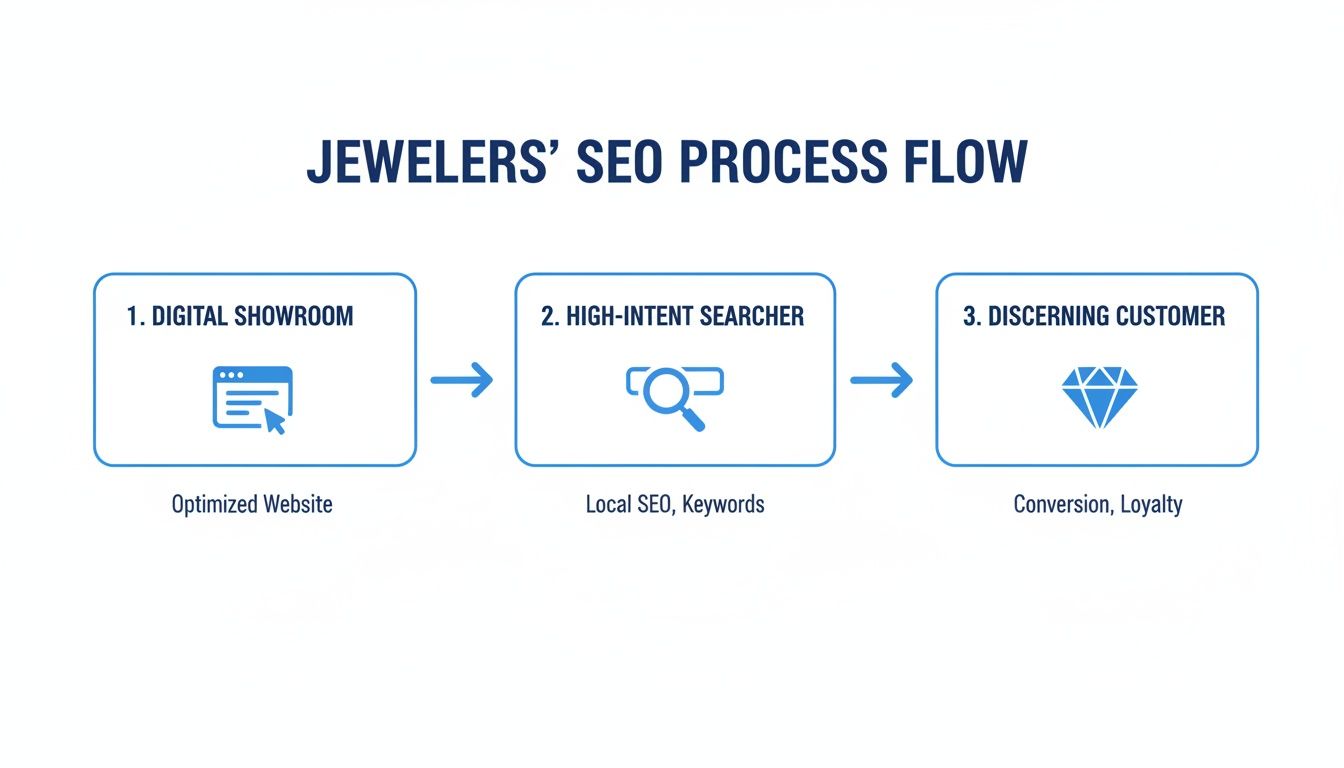
As you can see, a well-optimized digital showroom doesn't just sit there waiting for visitors. It actively intercepts motivated searchers and guides them toward a purchase, making SEO the essential bridge between online intent and real-world revenue.
Nail Your Keyword Research to Find Eager Buyers
Winning at SEO really starts with one thing: figuring out the exact words your ideal customers are typing into Google. It's about getting way more specific than generic terms like "diamond rings." You need to tap into the high-intent phrases that basically scream, "I'm ready to buy."
Think of it like this: a search for "engagement rings" is just browsing. But a search for "vintage cushion-cut halo engagement ring"? That person is on a mission. Your job is to show up when they're on that mission.
How to Structure Your Keyword Strategy
A smart keyword strategy for a jeweler isn't just a long list of words. It's a carefully organized plan that connects every possible search to a specific stage of the customer journey—and a specific page on your website.
Let's break it down into three key areas.
High-Intent Keywords for Transactional Searches
These are your "money" keywords. They're the phrases people use when they have their credit card in hand. They often include words like buy, price, sale, or very specific product details.
buy 2 carat oval diamond ring online18k white gold tennis bracelet priceethical lab-grown diamond studs for sale
These are the keywords you'll target on your product and category pages. Every one of those pages needs to be optimized to answer the intent behind that search, making it dead simple for someone to go from Google to checkout.
Informational Keywords to Build Authority
Not everyone is ready to buy right now. A lot of people are in the research phase, looking for advice and expertise. This is your chance to become their trusted guide.
how to choose diamond claritylab grown vs natural diamonds explainedwhat is the best metal for an engagement ring
These topics are perfect for blog posts, in-depth buying guides, and educational articles. By answering your customers' biggest questions, you build incredible trust and authority. Down the line, when they are ready to buy, you'll be the first brand they think of.
Local Keywords to Get People in the Door
If you have a physical showroom, local SEO is your bread and butter. These keywords connect you with customers in your neighborhood who are looking for in-person services.
custom jewelry design near mebest engagement ring stores in Bostonjewelry repair Brooklyn
These terms are critical for your homepage, your location-specific pages, and, of course, your Google Business Profile. When a local customer needs a jeweler, you want to be the first name they see.
Finding Your Keyword Goldmine
So, where do you find all these valuable keywords? This is where tools like Ahrefs or SEMrush are worth their weight in gold.
Start by brainstorming a list of "seed" keywords—your core products, like "sapphire necklace" or "men's wedding bands." Pop those into your tool of choice, and you'll uncover hundreds of related, more specific phrases.
Here's a pro tip: Don't get obsessed with search volume. Pay much closer attention to keyword difficulty and search intent. A lower-volume keyword like "art deco filigree engagement ring" might be far more valuable and easier to rank for than a super competitive term like "diamond ring."
This is especially true as more buyers start their hunt online. SEO has become the secret weapon for jewelers who can target these niche, high-intent searches.
For example, recent UK data shows a huge spike in searches for specific styles. 'Cluster ring' is now at 2,900 monthly searches (a +123% trend), and 'cushion-cut diamond ring' is at 880 searches (+179%). This data, highlighted in a jewelry market performance report, proves that today's buyers are looking for exactly what they want online. Smart keyword research is how you meet them there.
Finally, do some competitor analysis. It's one of the quickest ways to find gaps in the market. If another jeweler is getting a ton of traffic from a keyword you're not even targeting, that's a massive opportunity just waiting for you. By giving every keyword a clear purpose, your entire website will become an engine for attracting and converting your best customers.
Optimizing Product Pages to Convert Luxury Buyers
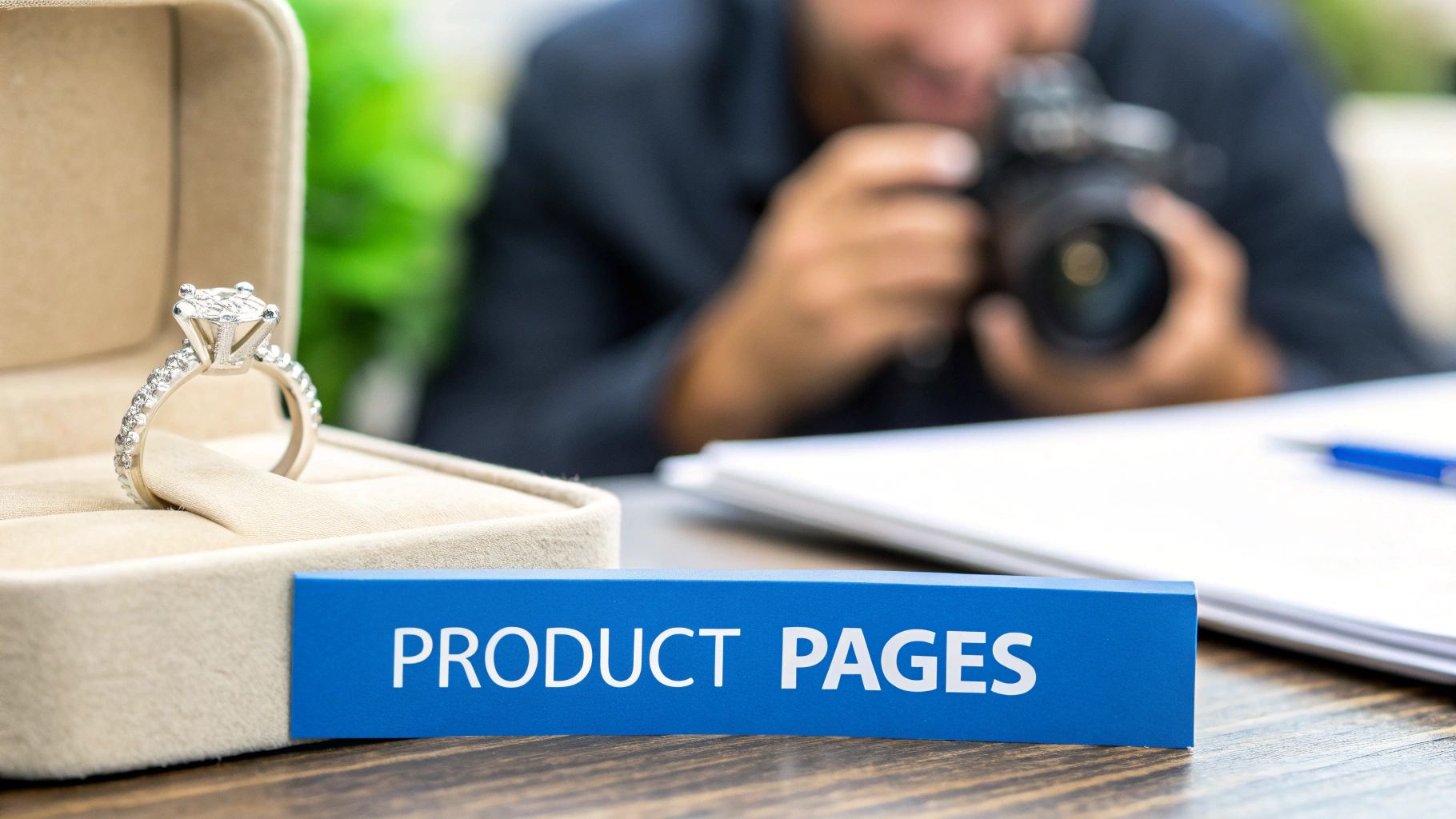
Think of your product pages as your best digital sales associates. They have to do more than just list specs; they need to tell a story, spark emotion, and build the kind of unwavering trust it takes to make a luxury purchase. This is where meticulous on-page optimization turns a simple listing into an asset that actually drives sales.
The goal is to align every single element—from the words on the page to the code behind it—with what a discerning buyer is looking for. When you get this right, these pages don't just start ranking for valuable keywords; they captivate shoppers from the moment they land.
Crafting Evocative Product Descriptions
Stock manufacturer descriptions are the enemy of good SEO. Your descriptions have to be 100% unique, weaving in your target keywords naturally while painting a vivid picture of the piece itself.
Don't just say "1.5 carat, G color, VS1 clarity." Tell the story. Describe the way light dances off the diamond's facets or the heirloom quality of a hand-finished setting. This approach does two things at once: it connects with the customer on an emotional level and gives search engines unique, keyword-rich content to index.
Anticipate the questions a customer might have and answer them right in the description. This not only makes for a better user experience but also helps you rank for those valuable long-tail search queries.
Showcasing Brilliance with Optimized Visuals
In the jewelry world, visuals are everything. Customers need to see the sparkle and the intricate details up close. High-resolution photos and videos are non-negotiable, but they create a major technical hurdle: file size.
Massive image files can absolutely cripple your page speed, and we all know a slow-loading site is a conversion killer. In fact, studies show that even a one-second delay in page load time can cause a 7% drop in conversions.
Here’s how to balance stunning quality with speed:
- Next-Gen Image Formats: Use modern formats like WebP, which gives you fantastic compression and quality compared to old-school JPEGs.
- Smart Compression: Use tools like TinyPNG or ImageOptim to slash file sizes without any noticeable loss in visual quality.
- Descriptive Alt Text: Every single image needs alt text. This is critical for both accessibility and SEO. Instead of "ring.jpg," use something descriptive and keyword-focused, like "art deco halo engagement ring with milgrain details."
A potential customer can't hold the piece in their hands, so your images and videos have to do all the heavy lifting. Optimizing them for both beauty and performance is a fundamental part of effective SEO for jewelers, directly impacting both rankings and sales.
Implementing Schema Markup for Rich Results
Beyond what users see, there’s a powerful technical SEO layer you need to add: schema markup. This is essentially code you add to your site that helps search engines understand your content on a deeper level.
For a jewelry product page, two types of schema are absolutely essential.
Product Schema
This markup tells Google specific details about your product, which can then show up as "rich snippets" right in the search results. Key details include:
- Product Name: The full name of the piece.
- Price: The current price and currency.
- Availability: Whether it's in stock, out of stock, or on pre-order.
- Brand: Your store's brand name.
Review Schema
This one is huge. Review schema pulls in your aggregate customer ratings and review counts. Seeing a 4.9-star rating next to your product in the search results dramatically increases trust and click-through rates. It’s powerful social proof that starts working before anyone even visits your site.
Implementing this structured data makes your listings stand out from competitors who haven't bothered with this step. It's a technical tweak with a massive competitive payoff. For a deeper dive, you can learn more about how to boost conversions for luxury e-commerce sites in our detailed guide. These small enhancements build the confidence needed to drive high-value online sales.
Dominating Local Search for Your Showroom
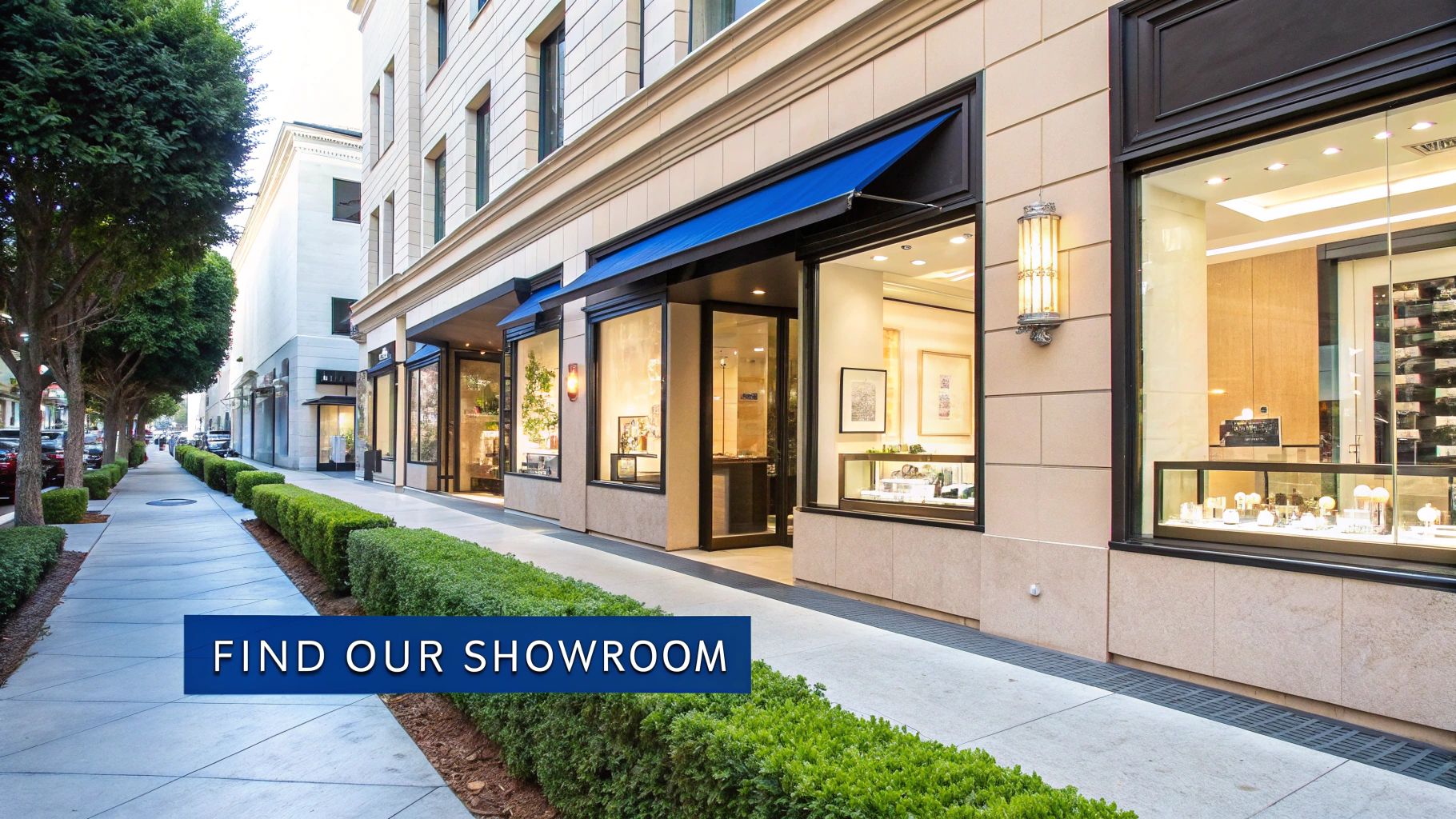
For a jeweler with a physical showroom, local SEO isn't just a marketing tactic—it's how you connect with the most valuable buyers in your area. When an affluent customer down the street searches for "custom engagement rings near me," you absolutely have to be the first name they see. This is where a single search can turn into a lifelong client relationship.
Your Google Business Profile (GBP) is the cornerstone of your local strategy. It's a free, surprisingly powerful tool that acts as your digital storefront on Google Search and Maps. Honestly, spending time getting your GBP right is one of the highest-impact things you can do for your local marketing.
The Foundation Your Google Business Profile
Think of your GBP as much more than a simple listing. It's a dynamic, interactive profile that potential clients will see and judge you by every single day. Getting the fundamentals right is the first step to owning that coveted Google 'Map Pack' at the top of local search results.
First, your core business information has to be perfect. This means your business Name, Address, and Phone number (often called NAP). Consistency here is non-negotiable. The NAP on your Google profile must exactly match what's on your website and every other online directory.
Even a tiny inconsistency, like using "St." on your website but "Street" on your GBP, can create confusion for search engines and weaken your local ranking signals. Take five minutes and audit your online presence—make sure every mention of your business is identical.
From there, it's time to bring your profile to life. Don't just set it and forget it. You need to leverage GBP's features to show off the luxury and craftsmanship of your brand:
- Professional Photos: Upload high-resolution images of your showroom's interior and exterior. Add shots of your team consulting with clients and, of course, your most stunning jewelry collections. This visual proof builds immediate trust.
- GBP Posts: Treat this like a mini-blog right on your search listing. Announce new arrivals, promote upcoming trunk shows, or share educational content about diamond cuts. Fresh posts keep your profile relevant.
- Q&A Section: Don't wait for people to ask questions. Proactively add and answer the most common ones yourself. This allows you to control the narrative and provide crucial information upfront.
Building Trust Through Reviews and Citations
Positive customer reviews are a huge local ranking factor. More importantly, they provide the social proof that a hesitant luxury buyer needs before they decide to walk through your door. You need a simple, non-pushy process for encouraging satisfied customers to leave a review on Google.
Just asking a happy client after they pick up their finished custom design can lead to incredibly powerful testimonials. And make sure to respond to every review, good or bad. It shows you're engaged and care about the customer experience, which boosts your credibility.
Beyond reviews, you need to build local citations. A citation is just an online mention of your business's NAP information, usually in directories like Yelp, The Knot, or your local chamber ofcommerce website. The more consistent, high-quality citations you have, the more confidence Google has that you're a legitimate business at your stated location. While this guide is for jewelers, many of the same principles in our post on local SEO for contractors apply to building a strong local foundation.
Targeting Local Intent with Service Pages
Finally, to capture those hyper-specific local searches, you need to create dedicated service pages on your website. These pages should target high-value, location-based keywords that signal a customer is ready to buy or book an appointment.
For example, instead of one generic "Services" page, build out individual pages optimized for terms like:
Jewelry Repair BostonCustom Engagement Rings MiamiWatch Appraisal San Francisco
Each of these pages needs unique content that details that specific service, includes customer testimonials, and has a clear call-to-action to book an appointment. To make sure your jewelry showroom appears for these local customers, you have to connect these pages to your broader strategy and dominate local maps SEO. This targeted approach turns your website into a powerful magnet for local business.
Building Brand Authority with Content and Backlinks
In the world of fine jewelry, trust is everything. A stunning website and perfectly tuned product pages can get customers in the door, but it’s brand authority that actually closes the sale. This is where a smart content and backlink strategy separates the brands that pop up and disappear from the ones that build a real legacy.
Think of it this way: Content is how you prove you're an expert. It’s how you answer your customers’ biggest questions and build a relationship long before they even think about buying.
Backlinks? They're the digital equivalent of a referral from a trusted colleague. They are votes of confidence from other reputable sites that tell Google your brand is the real deal. When you put them together, you have the foundation of a seriously powerful SEO strategy.
Creating High-Value Hub Content
The goal isn't just to churn out blog posts. It's to create the definitive resources that make you the go-to expert in the jewelry space. These comprehensive guides, often called "hub content" or "pillar pages," are magnets for both search traffic and valuable backlinks.
You have to think beyond simple product announcements. Your customers are making huge, emotional investments, and they're hungry for information that helps them feel confident in their choice.
Here are a few examples of content hubs that work wonders:
- The Ultimate Guide to Diamond Shapes: An in-depth article exploring the history, pros, and cons of every major diamond cut, complete with interactive visuals.
- Lab-Grown vs. Natural Diamonds Explained: An unbiased, fact-based comparison covering the science, ethics, and value propositions of each, helping buyers choose what’s truly right for them.
- A Guide to Choosing the Perfect Engagement Ring Metal: A detailed look at platinum, white gold, yellow gold, and rose gold, covering everything from durability and appearance to long-term maintenance.
This is the kind of content that naturally brings in people searching for things like "what is the best diamond clarity" or "how to choose an engagement ring." Even better, it becomes a valuable asset that other websites will want to link to. To really build a strong digital presence and enhance credibility, exploring an Ecommerce Link Building Playbook can give you a massive leg up.
Earning High-Quality Backlinks Through Strategic Outreach
Once you’ve created something exceptional, you can't just sit back and hope people find it. You need a proactive outreach plan to earn backlinks from relevant, high-authority websites. In the jewelry world, a single backlink from the right publication can be more powerful than a hundred low-quality links combined.
A backlink from a well-respected luxury lifestyle blog is a powerful signal to Google. It says, "This jeweler is a trusted expert in their field," which can significantly boost your rankings for competitive keywords.
Your outreach needs to be targeted and focused on building real relationships. Instead of blasting out mass emails to hundreds of sites, identify a curated list of ideal partners. A great place to start is by looking at who is linking to your competitors. You can learn more about that in our guide on how to do competitor analysis in SEO.
Your Ideal Backlink Targets
Focus your energy on sites whose audiences are a perfect match for yours. This makes your outreach feel less like a cold request and more like a valuable, natural collaboration.
To make this easier, here's a simple matrix matching content ideas with the right backlink targets. This helps you build a strategic outreach plan from the get-go.
Content Idea and Backlink Target Matrix
| Content Type/Topic | Primary Keyword Intent | Ideal Backlink Targets |
|---|---|---|
| Comprehensive Buying Guides (e.g., Diamond Clarity Guide) | Informational ("how to," "what is") | Wedding planning blogs, bridal magazines, engagement-focused publications (e.g., The Knot, Brides). |
| Trend Reports & Style Guides (e.g., "Top Jewelry Trends for 2025") | Informational & Commercial Investigation | High-end fashion blogs, luxury lifestyle magazines, celebrity style websites. |
| Educational Articles (e.g., "The History of the Tennis Bracelet") | Informational & Research | Jewelry industry publications, historical societies, online encyclopedias, luxury goods forums. |
| Local Event or Collection Launch | Commercial Investigation & Transactional ("near me") | Local news outlets, city lifestyle blogs, event listing websites in your specific area. |
When you reach out, always personalize your message. Reference a specific article they've written and explain exactly how your resource adds more value for their audience.
It's all about creating genuine value and building real relationships. Do that, and you'll build a backlink profile that reflects the prestige of your brand, driving both your rankings and your revenue.
Common Questions We Hear from Jewelers
When you're running a jewelry business, focused on beautiful craftsmanship and personal client relationships, SEO can feel like a whole other world. It’s natural to have questions. Here are the ones we hear most often from brands just like yours, with the straightforward answers you need.
How Long Does It Take for Jewelry SEO to Actually Work?
This is always the first question, and the honest answer is this: SEO is a long-term strategy, not a quick fix. You might see some small wins from technical tune-ups in a few weeks, but building real, sustainable momentum in the jewelry world takes time.
You should plan on seeing significant, measurable results in about 4 to 6 months. This isn't just a waiting game; it's a period of laying a crucial foundation.
Here’s what that timeline typically looks like:
- Months 1-2: We dive deep into keyword research, run a full technical audit, and start optimizing your most important product and category pages. This is the groundwork.
- Months 3-4: The focus shifts to creating high-value content, like detailed buying guides. We also begin targeted outreach to earn those essential foundational backlinks.
- Months 5-6: This is when you start to feel the momentum. Your authority is building, you’ll see rankings improve for key search terms, and organic traffic should be picking up—leading to more qualified leads or sales.
Patience is everything in this game. Your timeline will depend on where your site is starting from, how competitive your keywords are, and how consistent you are. Rushing things usually leads to gains that disappear as quickly as they came.
Should I Focus on Product SEO or My Brand Name?
You absolutely need both. They serve two different, but equally vital, purposes. Think of it as attracting brand-new customers while making sure your loyal clients can always find you.
Branded SEO (searches for your store name, like "Tiffany & Co.") is about capturing people who are already looking for you. They might have seen an ad, gotten a referral, or are a past customer coming back. Nailing this is critical for repeat business and cementing your reputation.
Non-Branded Product SEO (searches like "vintage style engagement rings") is how you find new customers. These are people who want exactly what you sell but haven't heard of your brand yet. This is where you drive discovery and really grow your business. A balanced approach is the only way to build a resilient online presence.
Does Social Media Matter for a Jeweler's SEO?
Yes, it has a powerful, indirect effect on your SEO. While likes and shares aren't direct ranking signals Google uses, a strong social media game sends all the right signals to support your SEO efforts.
High engagement on visual platforms like Instagram and Pinterest can drive a ton of referral traffic straight to your website. This is a fantastic way to introduce new, highly interested audiences to your brand and your products.
Plus, when your content—say, a beautifully shot guide to diamond clarity—gets shared widely on social media, it massively increases the chance that bloggers, journalists, and industry publications will see it. If they love it, they’re far more likely to link to it from their own sites. Those links directly boost your backlink profile and your site's authority.
What’s the Single Most Important SEO Factor?
If I had to boil it down to one thing, it’s the quality and user focus of your product and category pages. This isn't just one "factor" but a whole ecosystem of elements that have to work together perfectly to please both search engines and, most importantly, your customers.
This means getting several key things right:
- Unique, Evocative Content: Go way beyond the specs. Write compelling descriptions that tell the story of the piece, answer common questions, and weave in keywords naturally.
- Professional, Optimized Visuals: High-resolution photos and videos are non-negotiable in jewelry. But they also have to be compressed so they load fast without sacrificing the ability to see every intricate detail.
- Customer Reviews and Social Proof: Trust is everything. Integrating customer reviews builds confidence and adds fresh, user-generated content that search engines really value.
When you combine these elements with smart keyword targeting and technical SEO basics like Product schema, you create pages that perfectly match what your customer is looking for. That’s the core of what Google wants to see, and getting it right is what leads to higher rankings, more traffic, and more sales.
Ready to build a digital showroom that elevates your brand and drives measurable growth? The team at KN Digital specializes in creating elegant, high-converting websites for luxury brands. We've helped jewelers increase revenue by 30-150% within 90 days.
Discover how our conversion-focused approach can transform your online presence at https://kndigital.co.